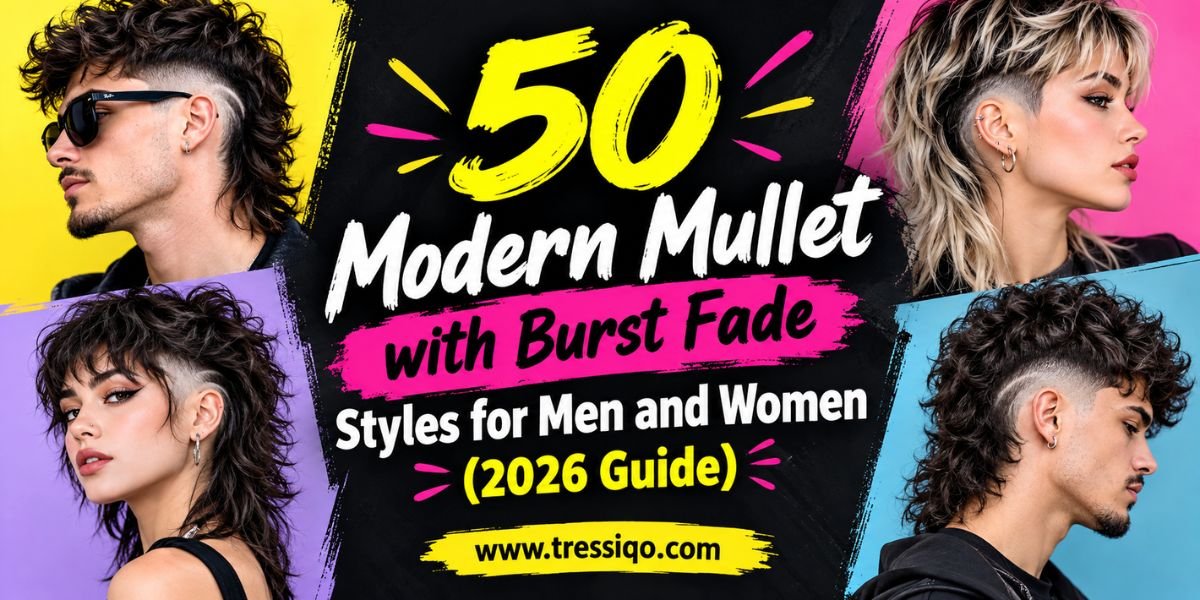
50 Modern Mullet with Burst Fade Styles for Men and Women (2026 Guide)
The mullet is back, and it’s better than ever. Pair it with a circular fade and you get one of the sharpest haircuts in barbershops and salons right now. This guide walks you through 50 variations, breaks down what works for your hair type and face shape, and shows you exactly how to style and maintain it. Whether you’re a guy heading into your first fade or a woman looking for something edgier than a lob, there’s a version here for you.
What Is a Modern Mullet with Burst Fade?
A modern mullet with burst fade combines a classic mullet shape with a circular fade that wraps around the ear instead of running in a straight line. The top and back stay long, and the sides taper down in a curved, “bursting” pattern that fans out from behind the ear.
That curve is what makes a burst fade different from a low fade, mid fade, or high fade. Those cuts fade in flat, horizontal lines. A burst fade follows the shape of your ear, which creates a rounder, more natural transition between short and long hair.
You’ll see this cut on men and women alike these days. It works because it’s adjustable. Keep it short and tight for something low-key, or grow it out long and shaggy for a bolder statement.
50 Modern Mullet with Burst Fade Styles
Here are 50 ways to wear this haircut, organized by length, texture, fade placement, added details, and color. Bring a few of these photos to your barber or stylist so you’re both on the same page before the clippers come out.S
Classic Modern Mullet with Burst Fade
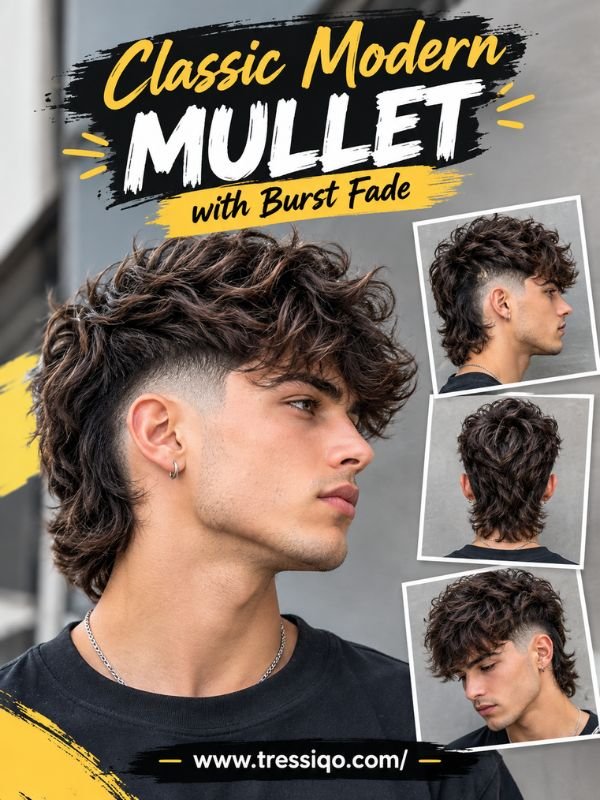
This is the baseline version everyone starts with. The top stays a bit longer, the back keeps traditional mullet length, and the sides get a clean circular fade. It’s balanced, not too extreme in either direction, and works in almost any setting.
If you’re new to mullets, start here. It gives you the shape without committing to anything too dramatic.
Short Modern Mullet with Burst Fade
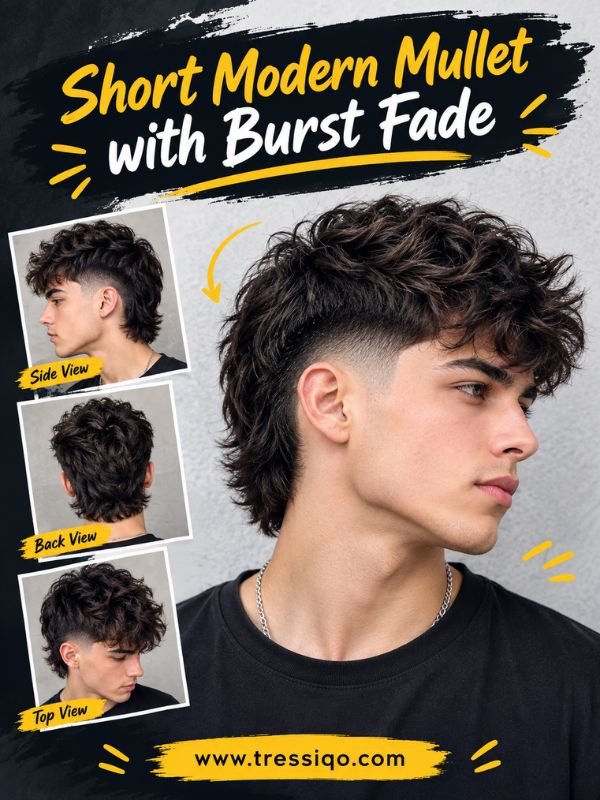
Here, everything gets trimmed down, including the length in back. You still get the mullet silhouette, just in miniature. The fade stays sharp and close to the skin.
This one’s low maintenance and easy to style. Run some product through it in the morning and you’re done. It also grows out gracefully, so you won’t need to see your barber as often.
Medium Length Mullet with Burst Fade
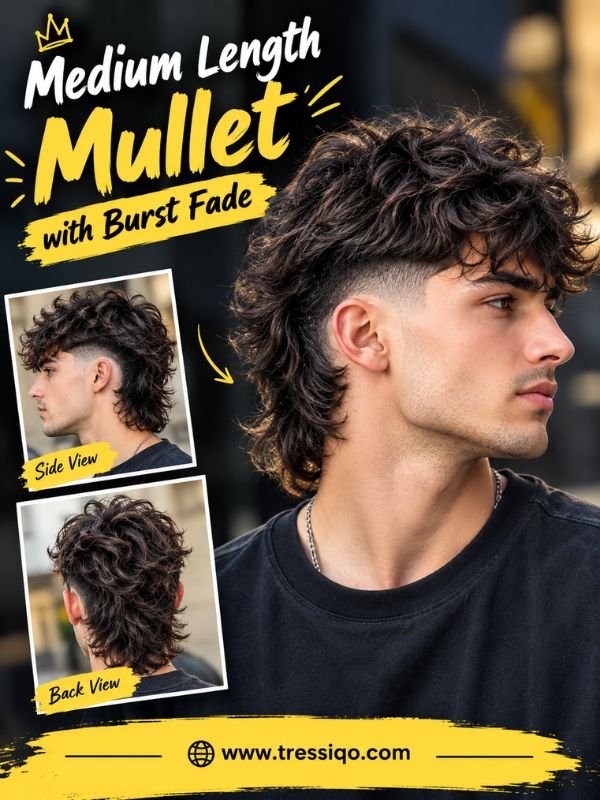
Medium length gives you the most room to play. There’s enough hair on top to style it up, back, or forward, and the length in back is noticeable without being dramatic. The burst fade keeps the sides from feeling bulky.
Think of this as the sweet spot between short and long. You get versatility without the upkeep that longer hair demands.
Long Modern Mullet with Burst Fade
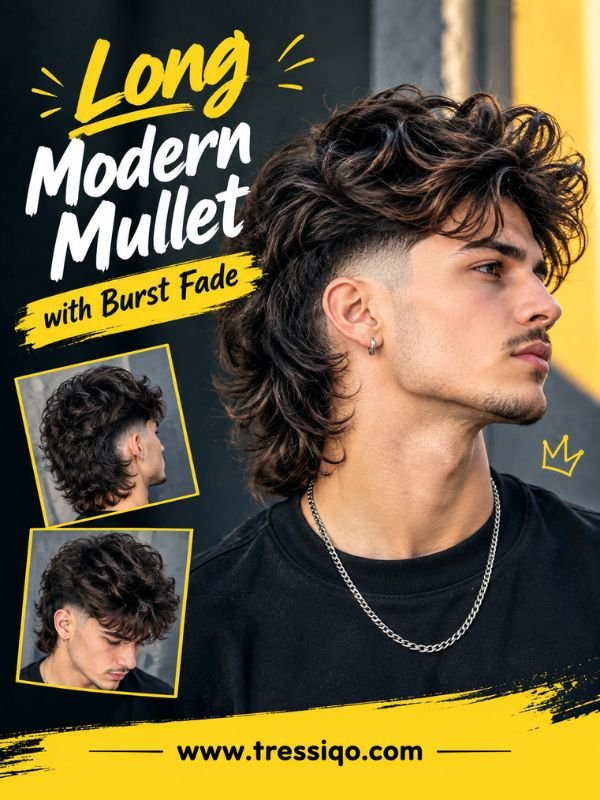
This is the mullet at full volume. The back grows out well past the collar, and the contrast against the faded sides is impossible to miss. It’s a statement cut, no question.
Growing hair out this long takes patience, usually several months from a shorter starting point. But once you’re there, the shape practically styles itself.
Textured Modern Mullet with Burst Fade
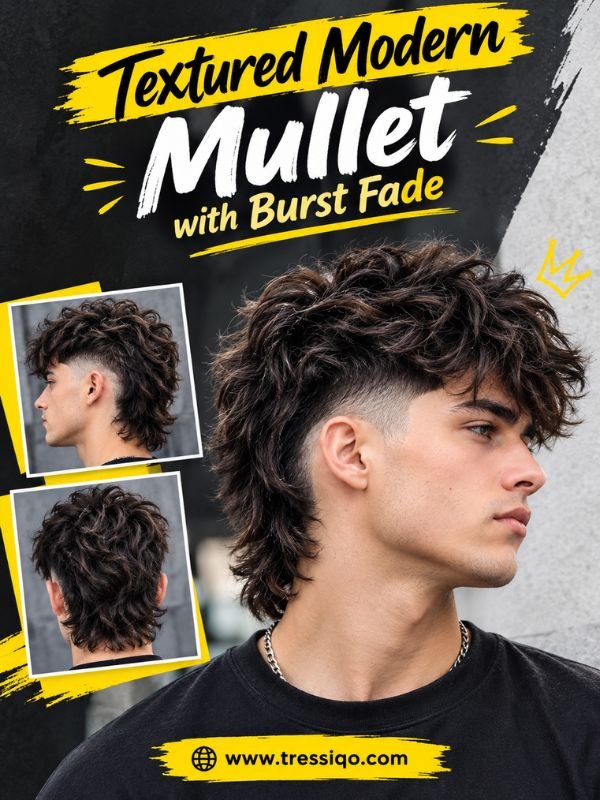
Texture changes everything about how a mullet moves. Layers get cut into the top and back so the hair has natural lift and separation instead of lying flat. The burst fade handles the sides while the texture does the work up top.
Ask your barber for a textured haircut technique like point cutting. It removes weight without shortening the overall length, so you keep the shape but lose the heaviness.
Low Burst Fade Mullet
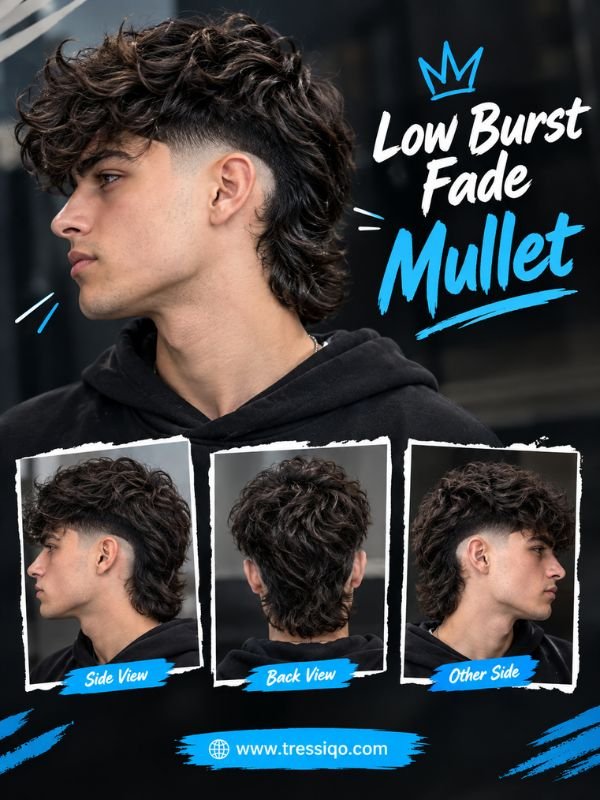
A low fade keeps the fade line close to your ear and neckline, so the transition feels subtle. Less of your scalp shows, which makes this a good pick if you’re easing into fades for the first time.
It’s also the safest option for conservative workplaces. The contrast is there, but it’s quiet.
Mid Burst Fade Mullet
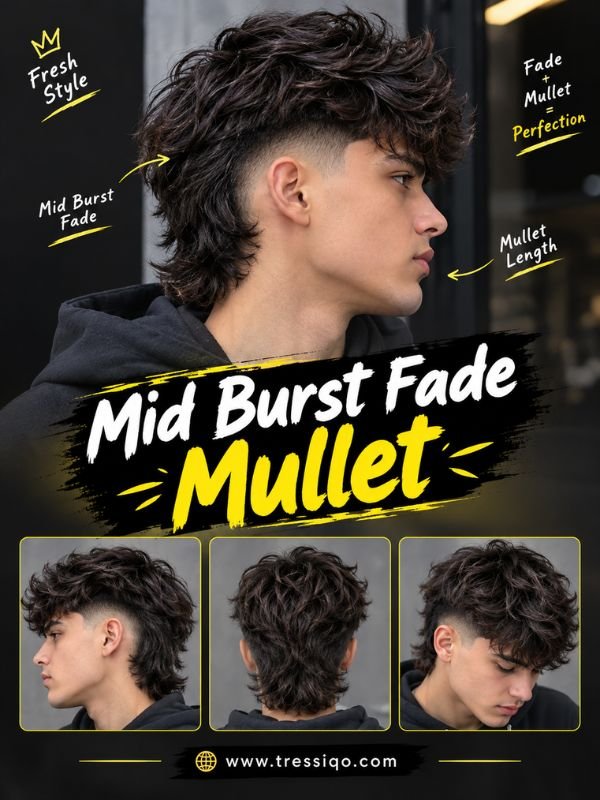
A mid fade starts a bit higher on the head, roughly at temple level. It’s the most balanced fade height, not too bold and not too subtle. Most barbers default here unless you ask for something different.
This is the version that photographs well from almost every angle, which is probably why it’s the most requested.
High Burst Fade Mullet
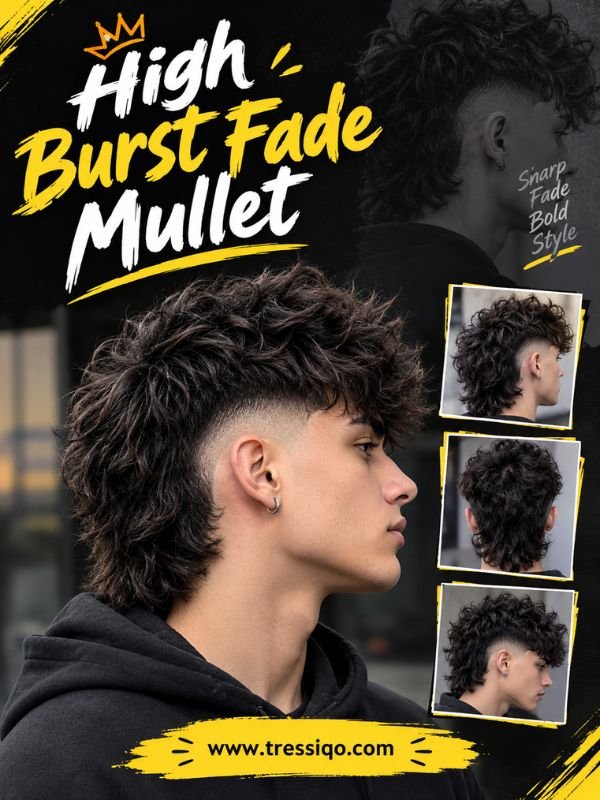
A high fade starts well above the ear and creates a much bigger contrast between the short sides and the long top. It’s bold, and people will notice.
If you want your mullet to make a statement, this is the fade height to ask for. Just know it needs more frequent trims to stay sharp, since regrowth shows faster up high.
Skin Burst Fade Mullet
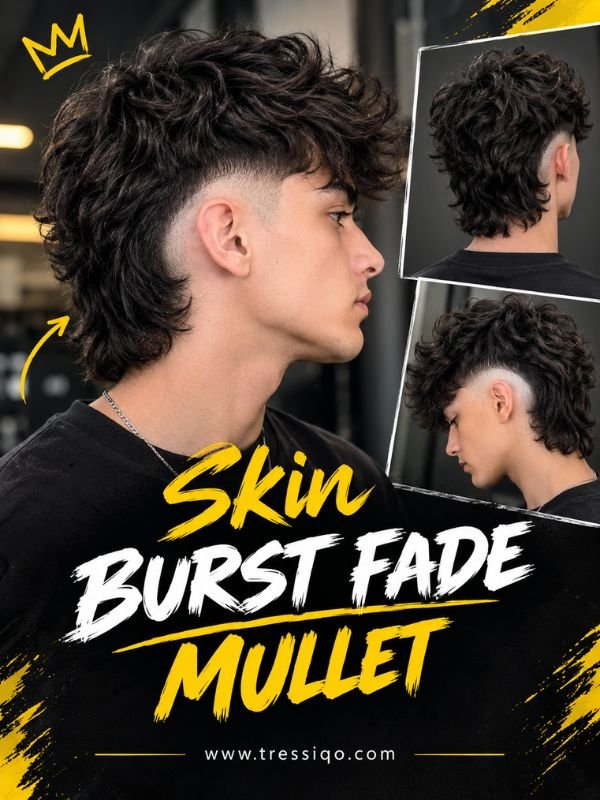
This takes the fade all the way down to bare skin near the ear. It’s the sharpest, cleanest version of the burst fade, and it creates maximum contrast against the longer hair.
A skin fade requires a skilled hand, so make sure your barber has real experience with this technique before you commit. A shaky line ruins the whole effect.
Taper Burst Fade Mullet
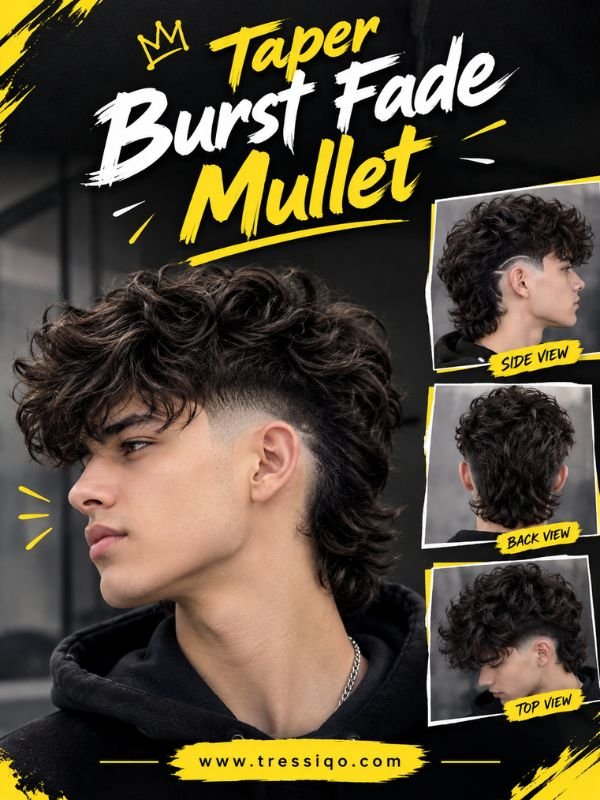
A taper fade is gentler than a full fade. Instead of a sharp gradient, the hair gradually gets shorter without dropping all the way to skin. It’s a softer look overall.
This works especially well if you want the mullet shape without the high-contrast styling that comes with a skin or high fade.
Straight Hair Burst Fade Mullet
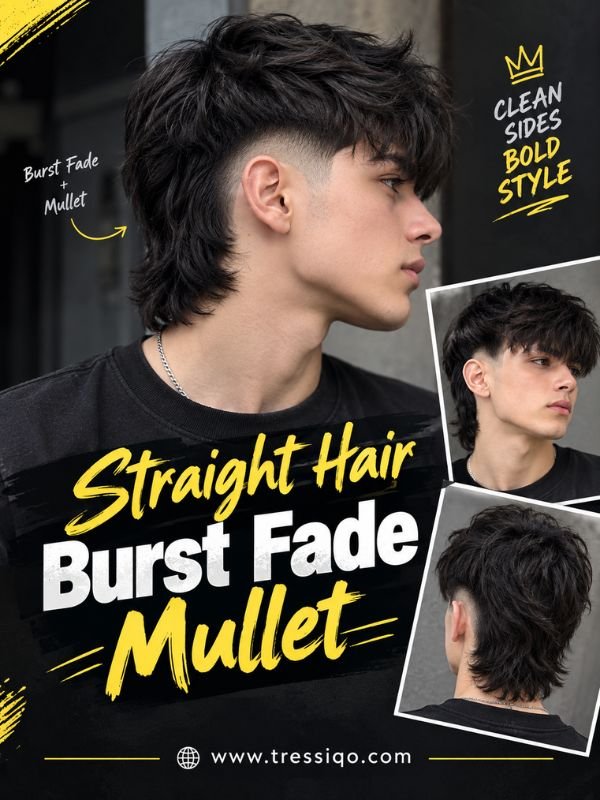
Straight hair shows off the geometry of this cut better than almost any other hair texture. The clean lines of the fade and the straight fall of the top create a crisp, structured look.
Because straight hair doesn’t add volume on its own, ask your stylist about texturizing the top so it doesn’t look flat.
Wavy Burst Fade Mullet
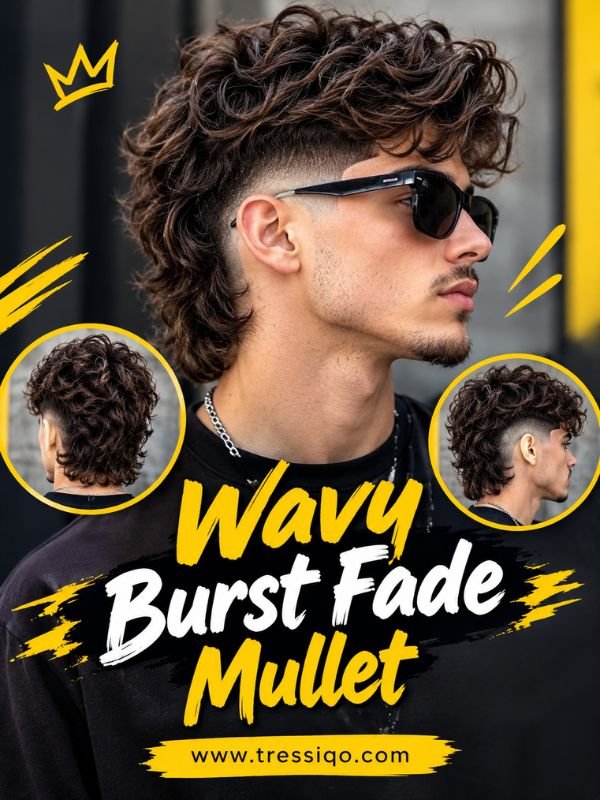
Waves bring natural movement to the mullet without any extra effort. The texture already does half the styling work, so you don’t need much product to get a lived-in look.
This pairs especially well with a shaggy hairstyle approach on top, since the waves and the layers complement each other.
Curly Burst Fade Mullet
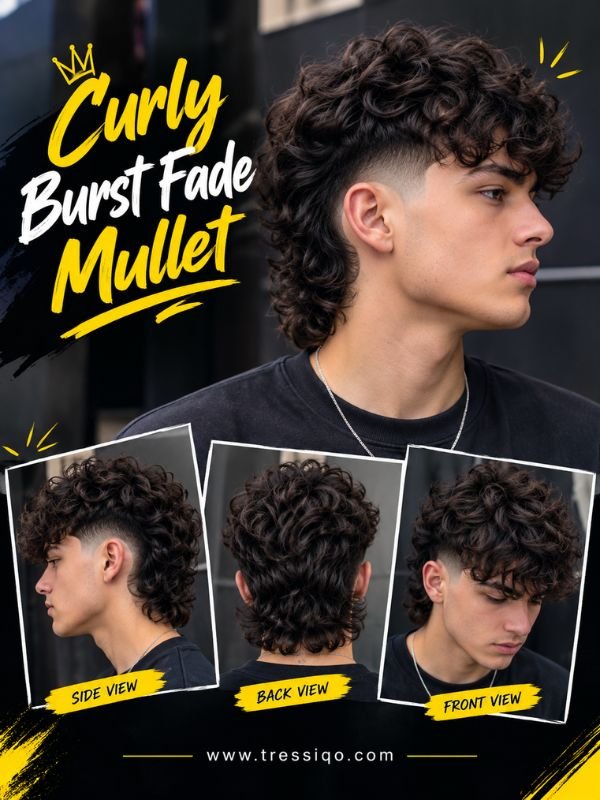
Curly hair gives this cut volume and personality that straight hair just can’t match. The curls stay full on top and in back while the burst fade keeps the sides controlled.
Curl definition products matter a lot here. A curl cream or gel will keep the shape from turning into a frizzy mess by midday.
Thick Hair Burst Fade Mullet
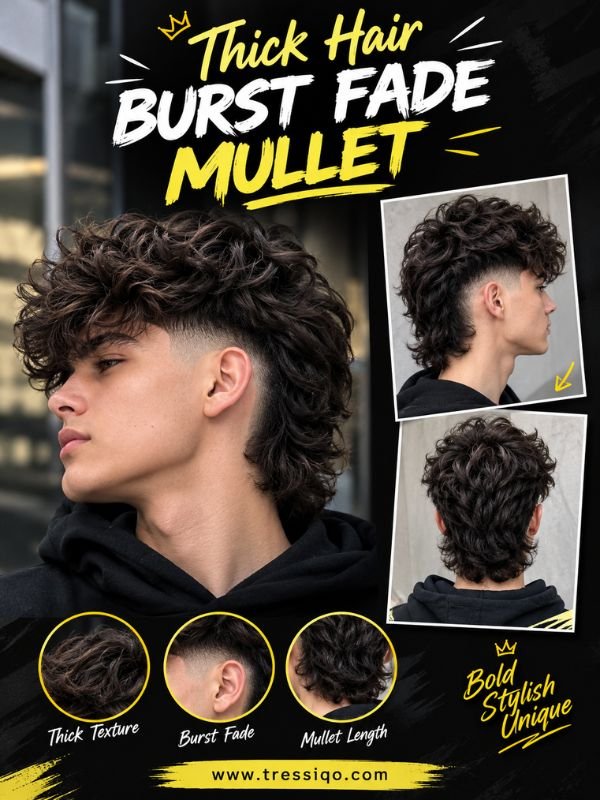
Thick hair holds this cut’s structure well, but it needs some thinning so it doesn’t feel heavy. The burst fade removes bulk from the sides, which balances out the density on top.
Ask your barber about thinning shears if your hair tends to puff out rather than lie down. It’ll make styling a lot easier.
Fine Hair Burst Fade Mullet
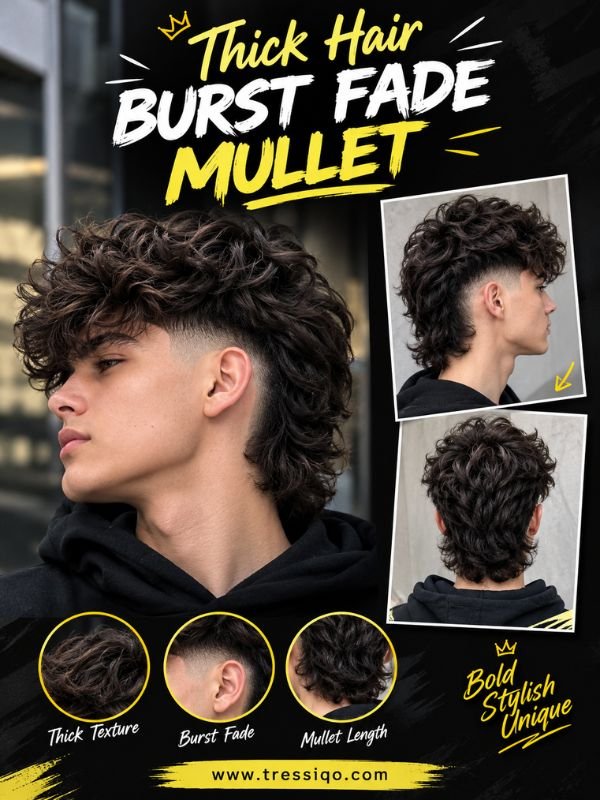
Fine hair can absolutely pull off this cut, it just needs a little help from styling technique. Light layering creates the illusion of volume where natural density is lacking.
Blow-drying at the roots and using a lightweight mousse will go a long way toward keeping fine hair from looking flat by the end of the day.
Messy Modern Mullet with Burst Fade
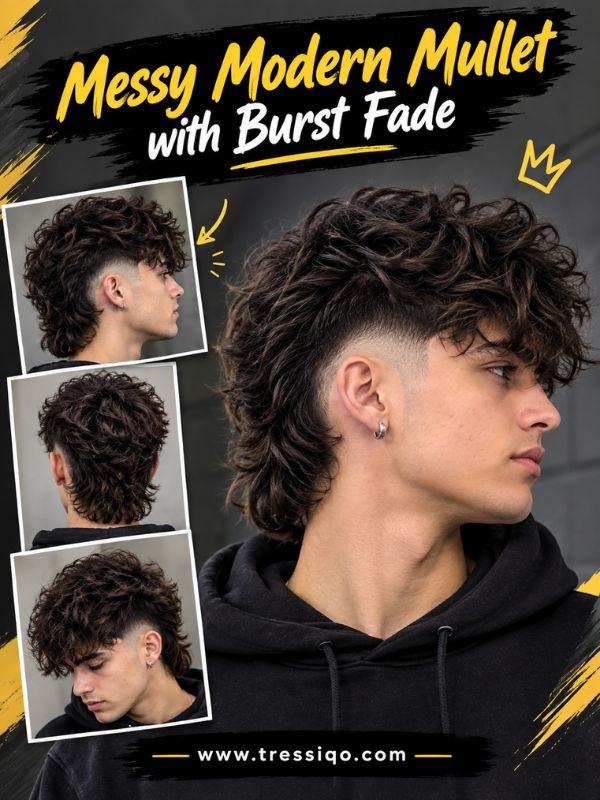
This version leans into an undone, relaxed finish. The top is styled loosely, almost like you just ran your hands through it, while the fade stays crisp underneath.
That contrast, messy on top and sharp on the sides, is what makes this style work. Don’t overthink the top. A little texture paste and your fingers are all you need.
Shaggy Burst Fade Mullet
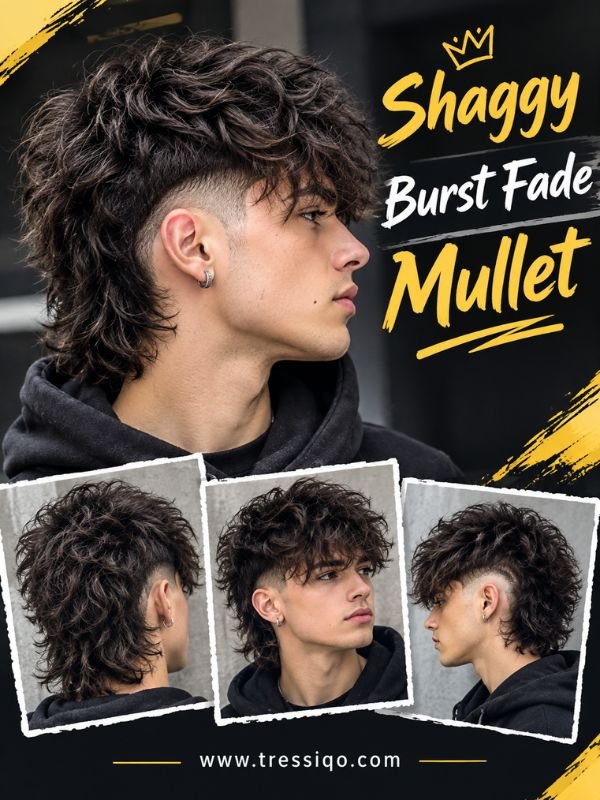
A shaggy hairstyle on top pairs naturally with a mullet’s silhouette. Multiple layers create movement and a slightly tousled feel, while the burst fade keeps things from looking unkempt.
This is a favorite among people who want retro vibes without an actual retro haircut. It splits the difference nicely.
Layered Burst Fade Mullet
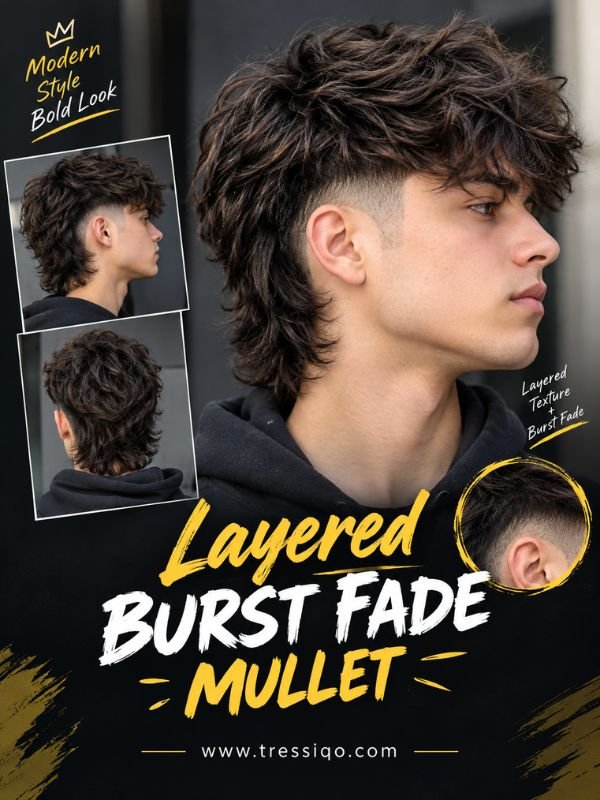
Heavy layering adds real dimension to the top and back sections. Instead of one solid mass of hair, you get movement and separation that catches the light differently depending on the angle.
This is a great option if your hair tends to sit flat naturally. The layers do the heavy lifting.
Choppy Modern Mullet with Burst Fade
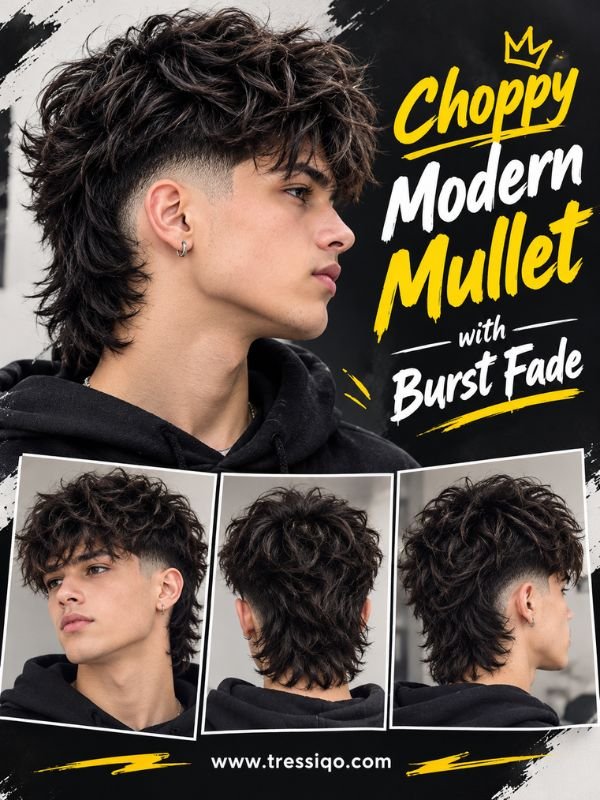
Choppy layers are cut at uneven lengths on purpose, giving the top a rougher, edgier texture. It’s less polished than a classic layered cut and more rebellious in attitude.
Pair this with a high or skin burst fade if you want the whole look to feel a bit more aggressive.
Tousled Burst Fade Mullet
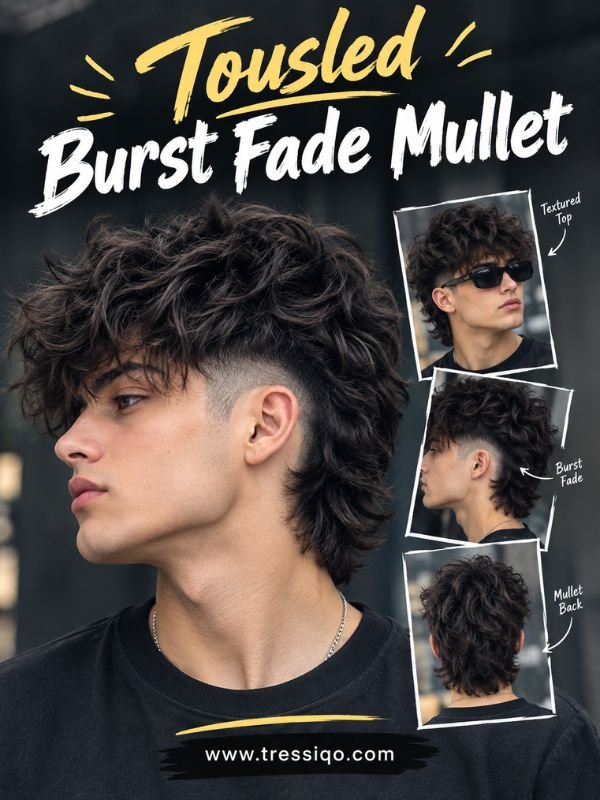
Tousled styling focuses on natural-looking volume and movement, almost like you woke up and it just fell into place. It’s not actually effortless, of course. A little texture spray and some finger styling get you there.
The fade stays clean underneath, which keeps the tousled top from reading as sloppy.
Burst Fade Mullet with Fringe
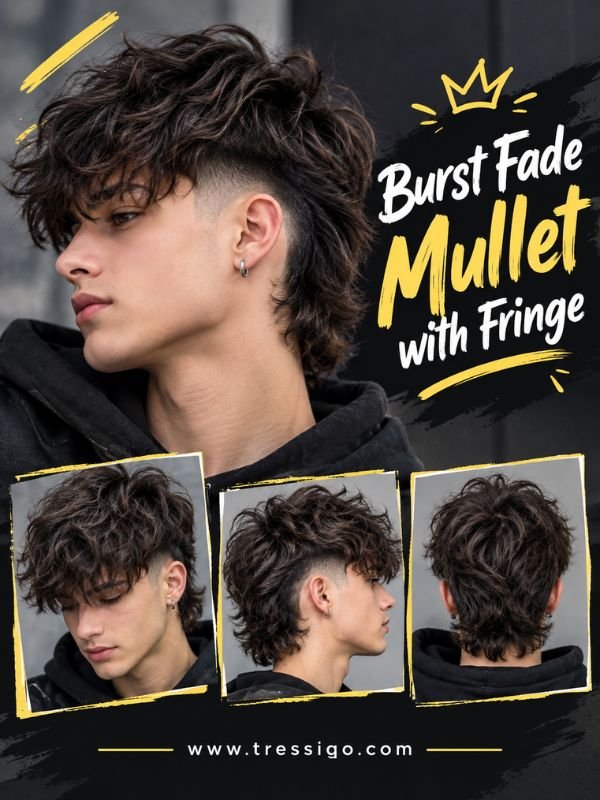
A fringe brings the length forward instead of just letting it sit at the back. It frames your face and adds a completely different vibe to the standard mullet shape.
This version tends to look younger and a bit more playful. It’s popular with teens and twenty-somethings especially.
Burst Fade Mullet with Textured Fringe
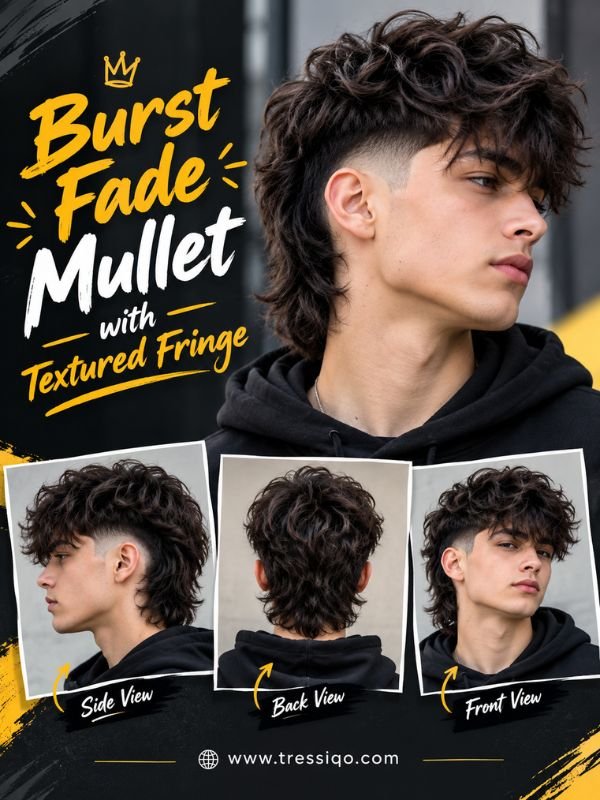
Texture in the fringe stops it from looking like a flat, blunt curtain of hair. Choppy ends and varied layering give the front section natural movement.
This works particularly well for wavy or curly hair types, since the texture in the fringe echoes the texture elsewhere.
Burst Fade Mullet with Side-Swept Fringe
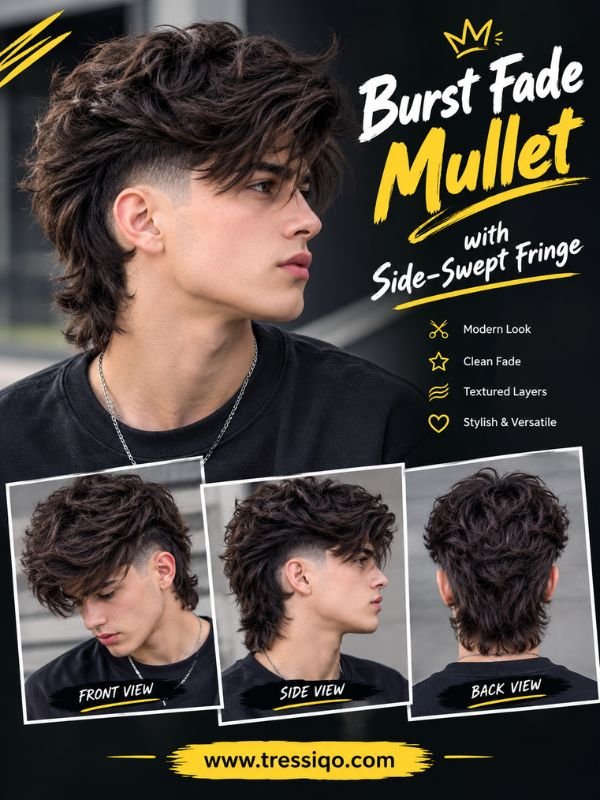
Instead of falling straight down, the fringe sweeps to one side. It’s a subtler, more polished way to wear length up front, and it works in professional settings better than a full fringe does.
This combination reads as more put-together overall, which makes it a solid choice if you want something a little dressier.
Burst Fade Mullet with Spiky Top
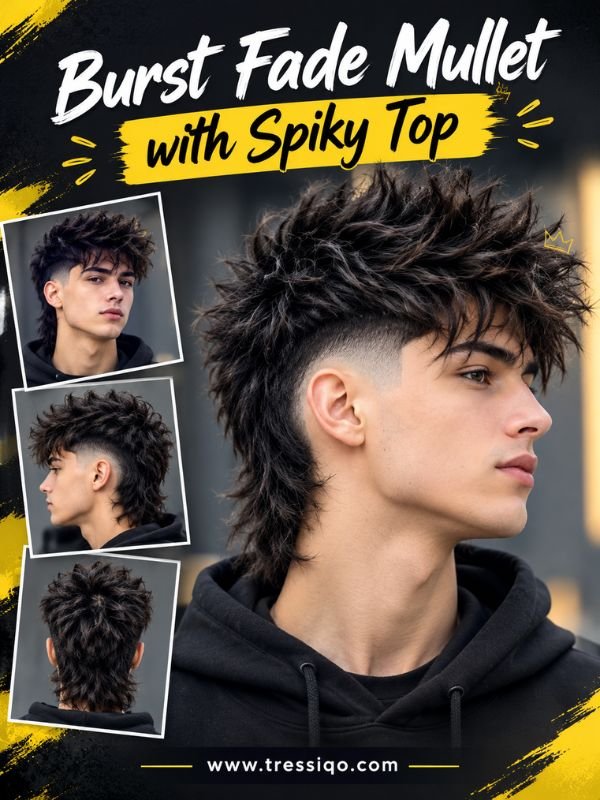
Styling products push the top hair into defined spikes here, adding height and a bit of edge. The burst fade underneath keeps the sides from competing with all that texture up top.
This one’s bold. It won’t disappear into the background, and that’s exactly the point.
Burst Fade Mullet with Quiff
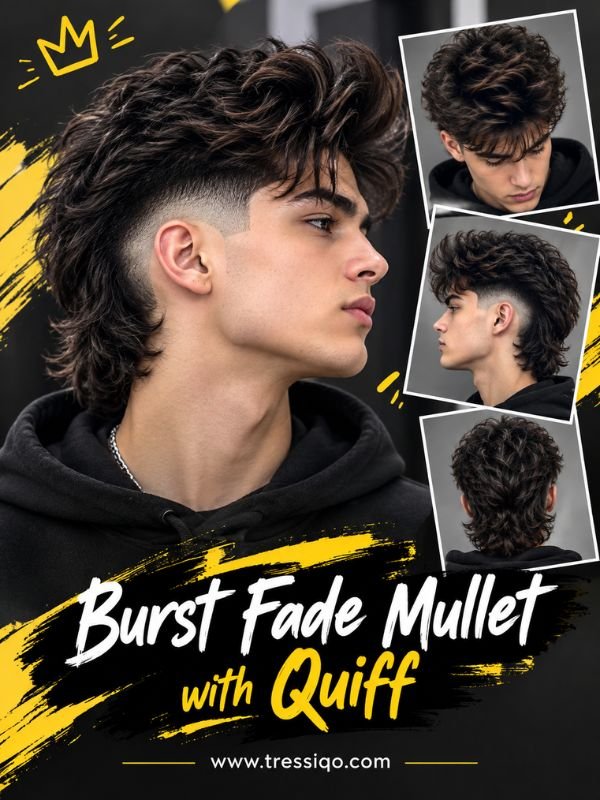
A quiff adds height and volume right at the front hairline, while the mullet length stays intact in back. It’s a confident, put-together look that still keeps the rebellious mullet energy.
This pairing works especially well for special occasions when you want something dressed up but not boring.
Mohawk Burst Fade Mullet
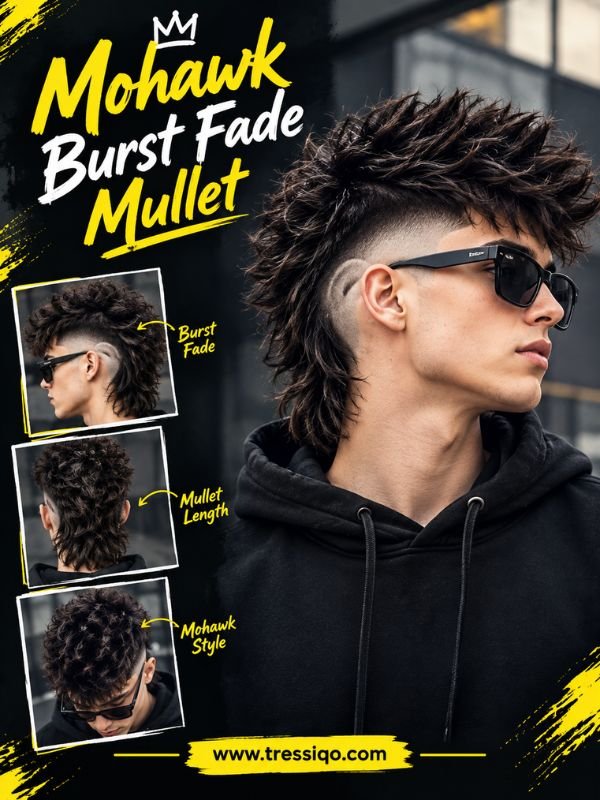
This variation runs longer hair straight down the center of the head, mohawk-style, while the sides get the full burst fade treatment. It’s dramatic, and it’s not for everyone, but it turns heads.
If you want a haircut that’s genuinely rare, this is one of the boldest combinations on this list.
Punk-Inspired Burst Fade Mullet
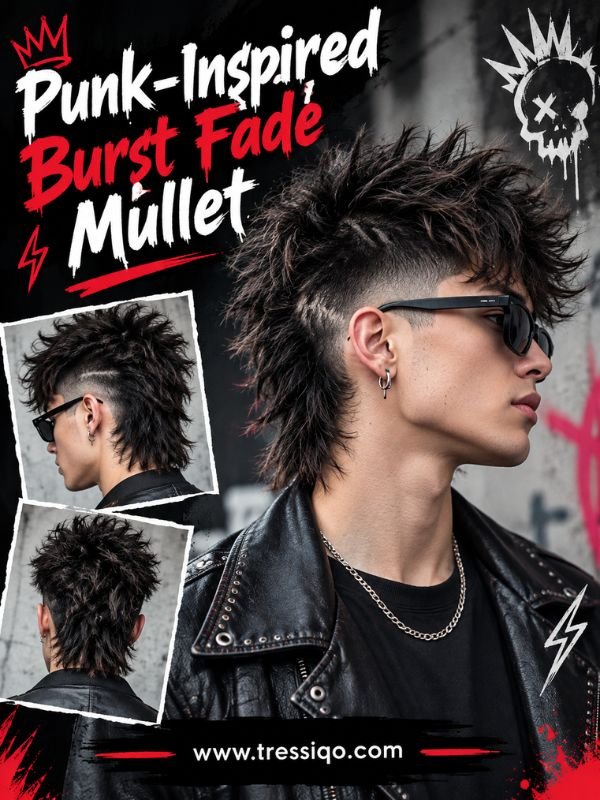
Sharp, uneven layers and deliberately rough styling give this version real attitude. It borrows from punk aesthetics without going full mohawk, keeping some of the classic mullet shape intact.
Consider pairing this with a razor design or bold hair color if you want to push the look even further.
Razor Design Burst Fade Mullet
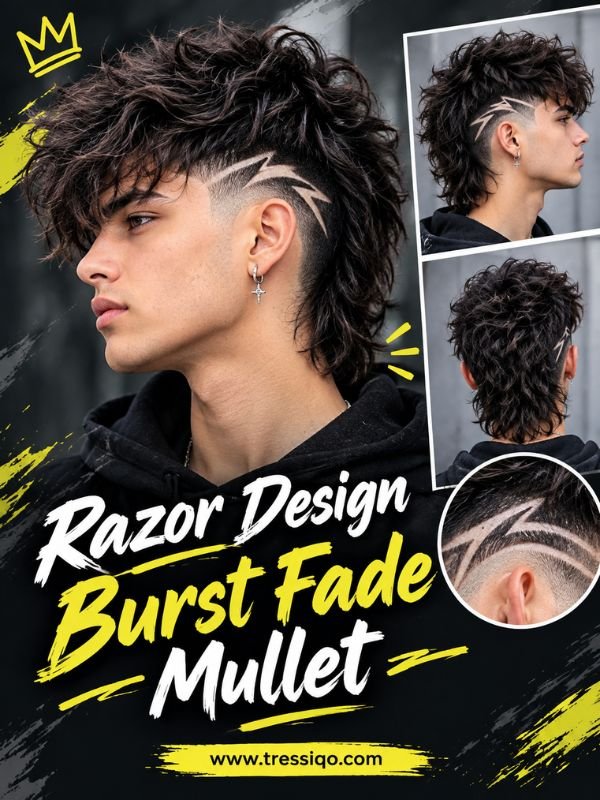
A razor design adds shaved patterns, lines, or artwork right into the fade itself. The burst fade becomes a literal canvas for whatever design you choose, from simple lines to detailed shapes.
Talk to your barber about their design experience before booking this one. Not every shop offers it, and skill level varies a lot.
Hard Part Burst Fade Mullet
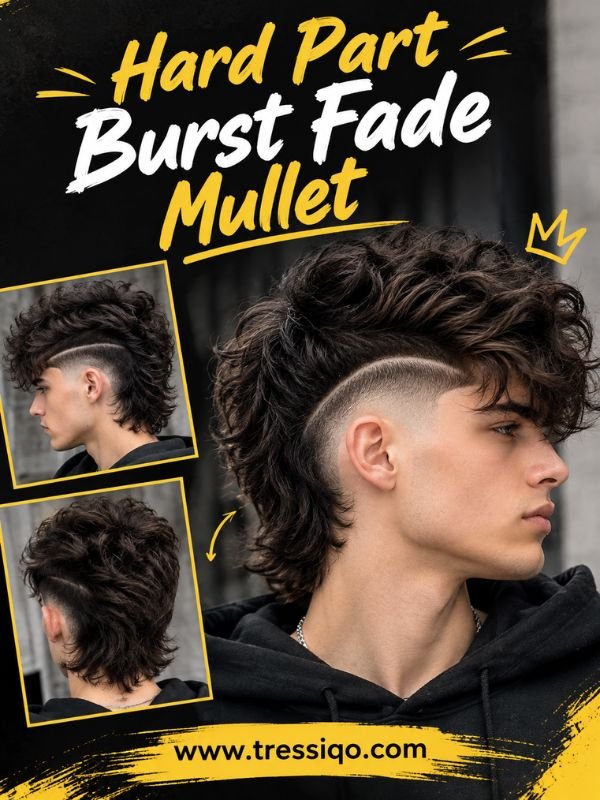
A hard part haircut uses a shaved line to separate the top section from the faded sides. It’s a small detail, but it adds a lot of definition and gives the whole cut a sharper, more structured finish.
This works especially well if you like a defined side part and want that line to stay crisp between trims.
Burst Fade Mullet with Undercut
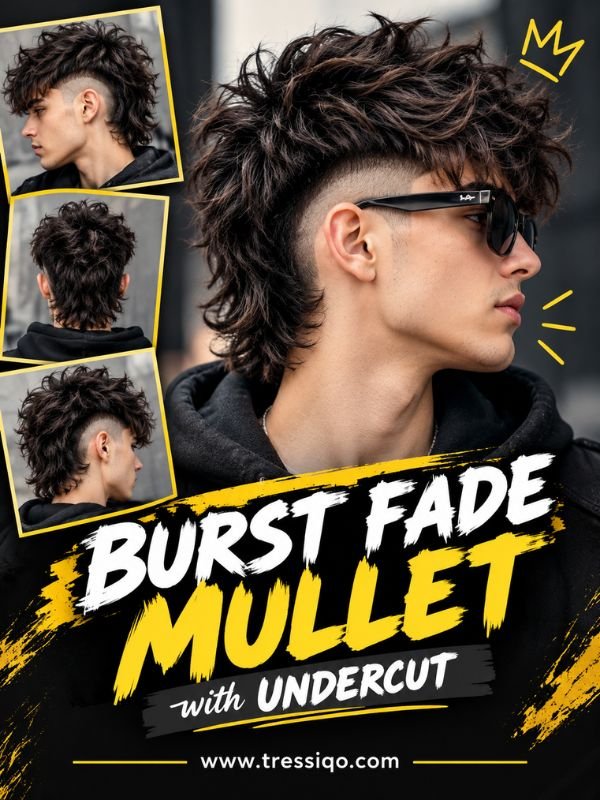
An undercut takes the sides down extremely short, shorter than a typical fade, while the top and back stay long. The contrast is dramatic, and the burst fade softens what would otherwise be a very stark transition.
This version tends to require more frequent maintenance since the undercut grows out noticeably fast.
Burst Fade Mullet with Beard Fade
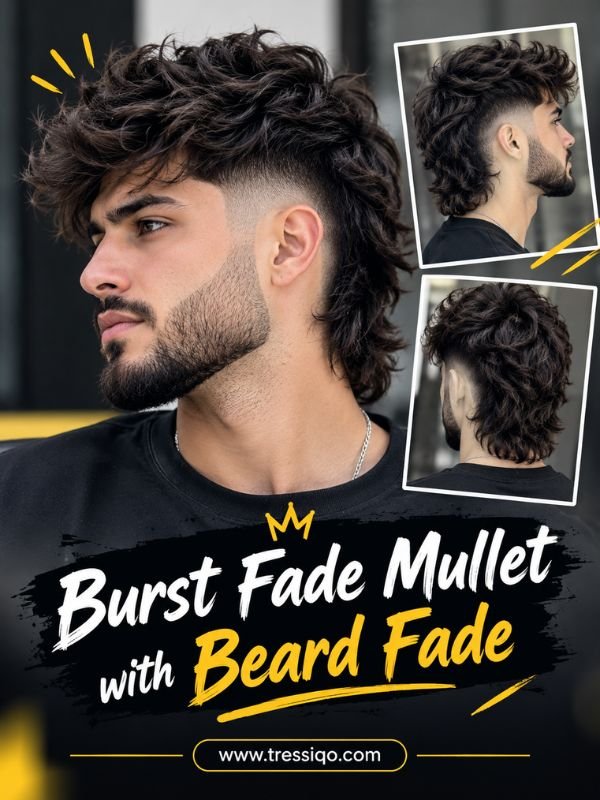
Here, the haircut blends directly into a beard fade, so there’s no hard line between your hairline and your facial hair. It’s a seamless, polished look that a lot of barbers can execute in the same appointment as your haircut.
If you keep facial hair regularly, ask your barber to fade both at once. It saves a trip and keeps everything consistent.
Burst Fade Mullet with Line Up
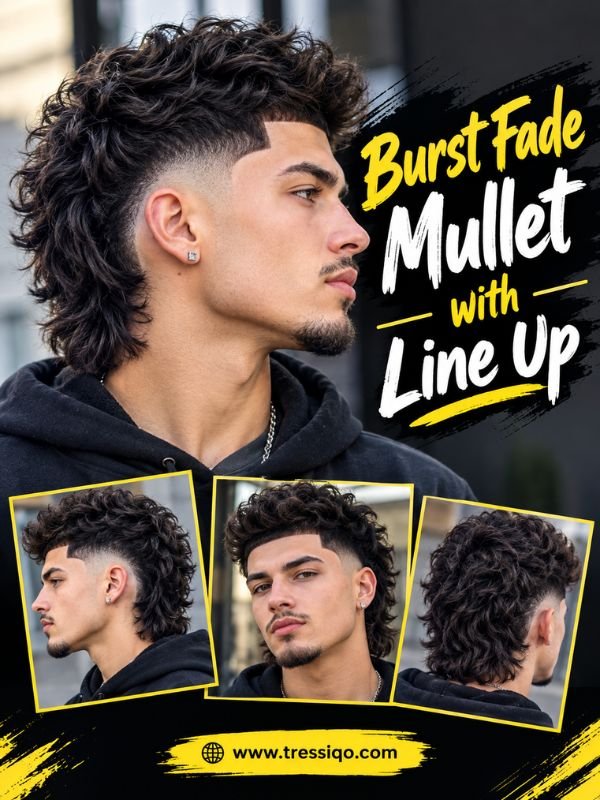
A line up adds crisp, straight edges along your hairline and temples. It sharpens the whole haircut and gives it that fresh-out-of-the-barbershop look.
This detail matters most right after a cut. Line ups grow out fast, sometimes within a week, so keep that in mind if you want it looking sharp for an event.
Burst Fade Mullet with Neck Taper
A neck taper cleans up the hairline at the back of your neck with a gradual fade instead of a hard line. It’s a small detail, but it makes the whole cut look more finished.
This is one of those details that’s easy to overlook until you see a mullet without it. The difference is noticeable.
Burst Fade Mullet with Temple Fade
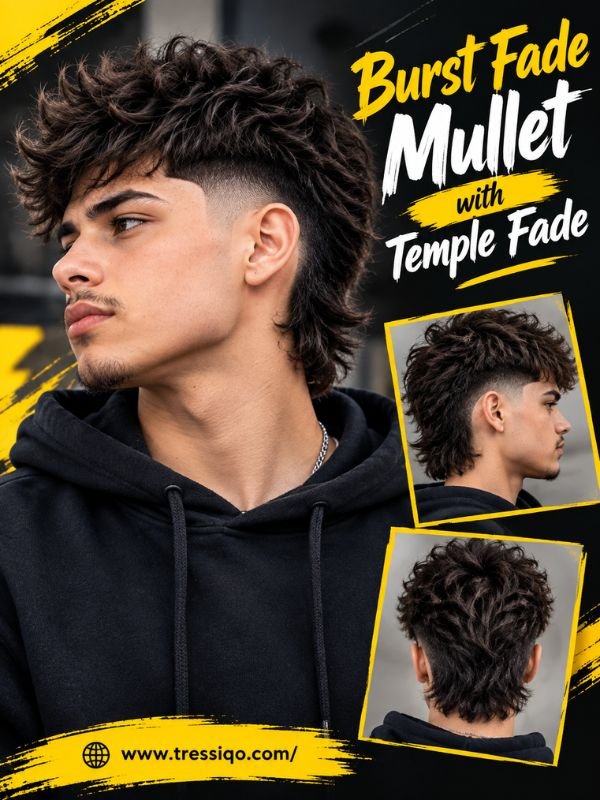
A temple fade focuses specifically on blending the hair near your temples, smoothing out that transition zone. The rest of the burst fade stays as usual, but this extra attention up top makes everything flow together better.
It’s a subtle upgrade rather than a dramatic style change, but subtle details add up.
Burst Fade Mullet with Drop Fade
A drop fade curves downward behind the ear instead of staying level, which adds visual interest and complements the natural curve of a burst fade nicely. The two techniques pair well because they’re both built around curved lines rather than straight ones.
This combination tends to look especially sharp with shorter hair on top, where the fade detail has room to stand out.
Colored Modern Mullet with Burst Fade
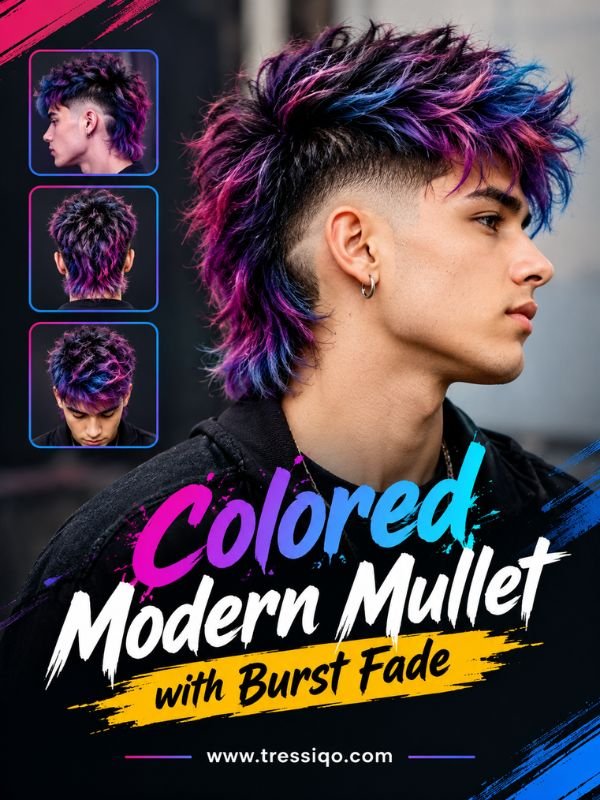
Adding hair color turns this cut into something even more eye-catching. Bold, unexpected shades or subtle, natural-looking tones both work, depending on how much attention you want to draw.
Talk to your colorist about how the color will interact with the fade. Some shades fade unevenly on very short hair, so it’s worth asking before you commit.
Blonde Burst Fade Mullet
Blonde brings out every layer and texture detail in the haircut. Lighter hair simply shows more, so the shape of the mullet and the sharpness of the fade both stand out more clearly.
If you’re going blonde from a darker natural color, budget for regular toning appointments. Blonde shifts brassy fast without upkeep.
Burst Fade Mullet with Highlights
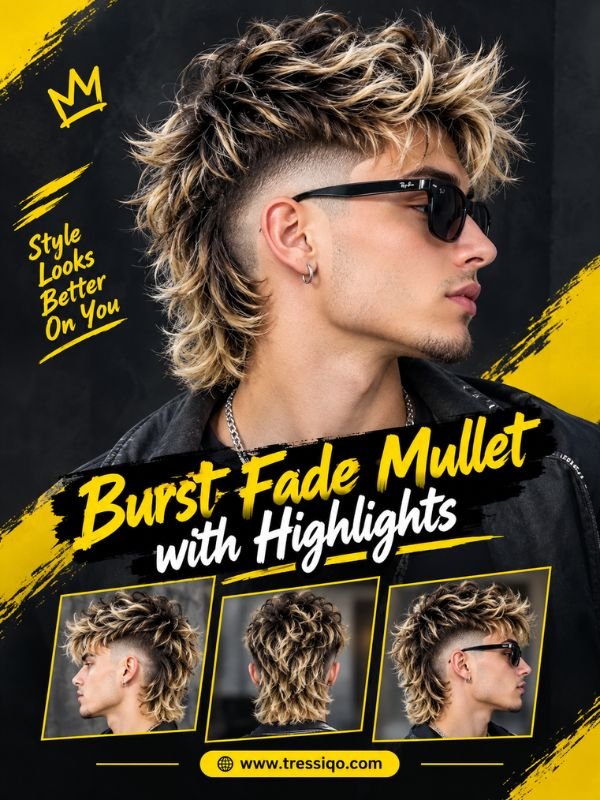
Highlights add dimension without committing to a full color change. Strategic placement around the face and through the top layers emphasizes movement and makes the haircut look more dynamic in photos and in person.
This is a lower-commitment way to experiment with color before going all in on something bolder.
Burst Fade Mullet with Braids
Small braided hairstyle sections through the top or back add texture and a completely different visual element to the cut. It’s a creative combination that works particularly well on longer, thicker hair.
This version takes more time to style, so it’s better suited to occasions than everyday wear, unless you genuinely enjoy the process.
Burst Fade Mullet with Twists
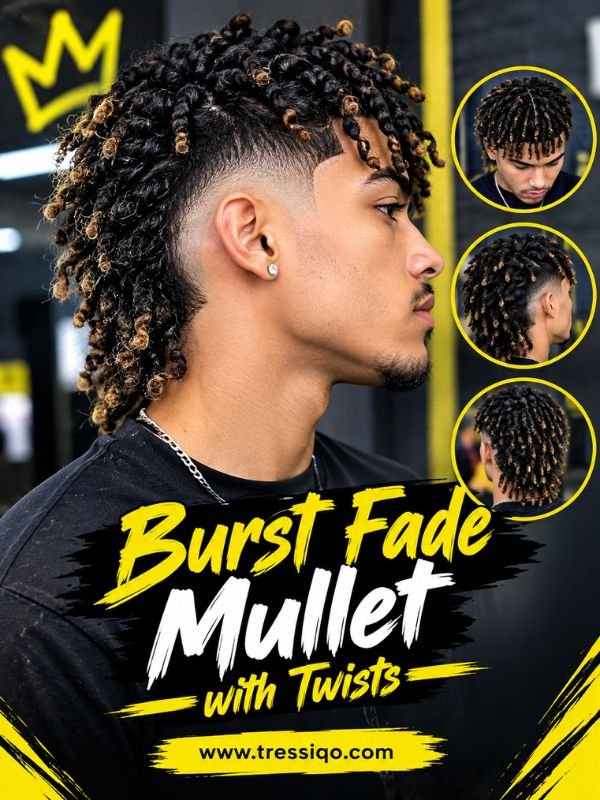
Twists through the top and back sections add volume and a distinct rope-like texture. They hold their shape well and give the mullet a completely different personality compared to loose, flowing styles.
This works especially well for coily or very curly hair types, where twists are already a natural, low-damage styling option.
Soft Modern Mullet with Burst Fade
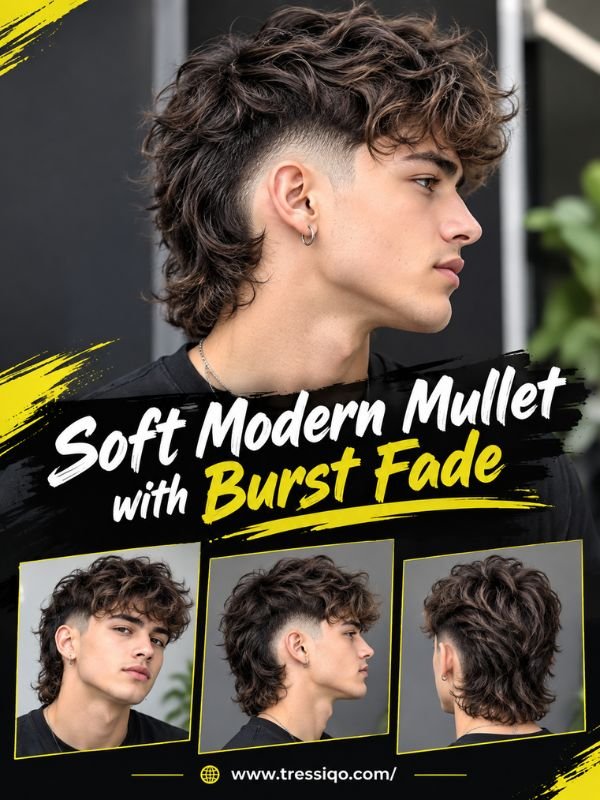
This version dials back the sharp contrast in favor of smooth, gentle blending throughout. The layers stay subtle, the fade transitions gradually, and the overall effect feels relaxed rather than edgy.
If bold fades and dramatic length feel like too much, this softer approach still gives you the mullet shape without shouting about it.
Korean Style Burst Fade Mullet
Inspired by trends popular in Korean hairstyle for men culture, this version favors soft, face-framing layers and natural volume over sharp, aggressive texture. The burst fade adds structure underneath while the top stays soft and youthful.
This style tends to work especially well with straight to slightly wavy hair, which holds the soft layering shape nicely.
Asian-Inspired Burst Fade Mullet
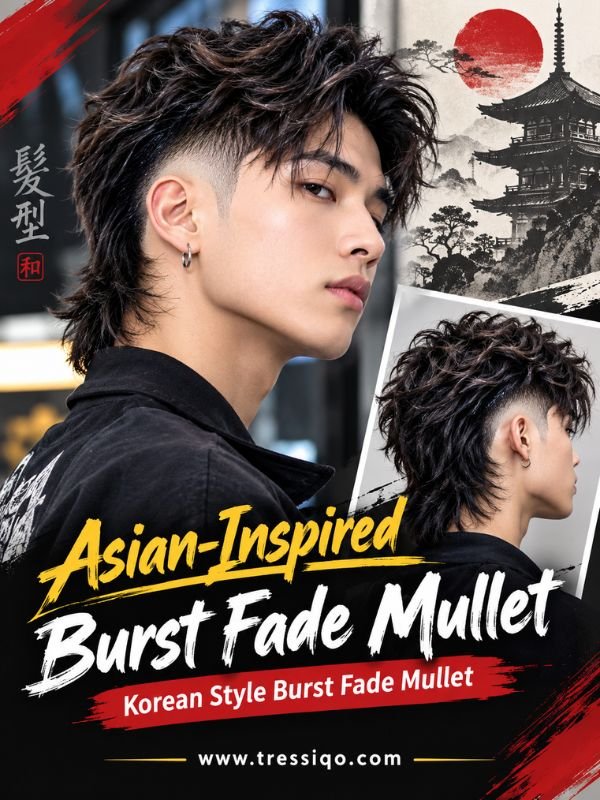
This take emphasizes clean lines paired with textured layering, drawing from broader Asian hairstyle for men trends. The burst fade keeps a crisp, defined outline while the top brings movement and volume.
It’s a great option if you like the structure of a classic mullet but want a softer, more contemporary top section.
Teen Style Burst Fade Mullet
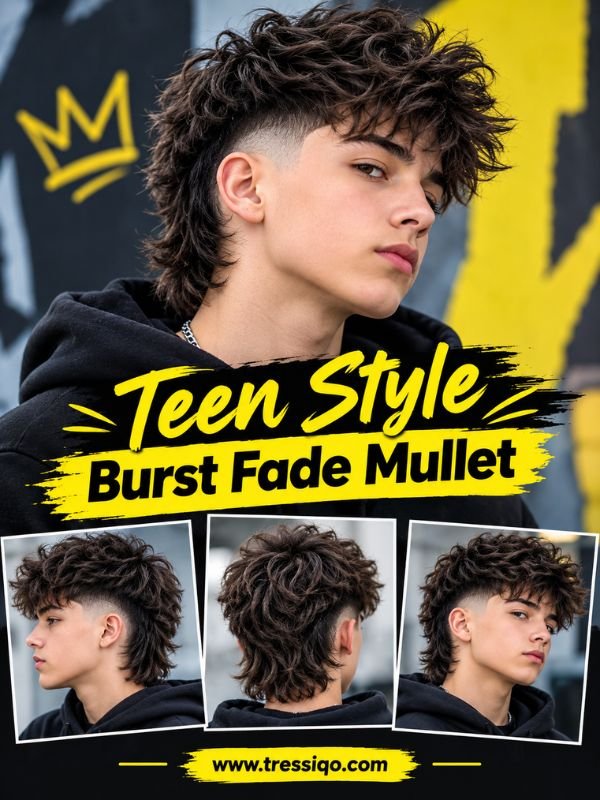
This version leans into current teen haircut trends, with playful texture and a slightly more relaxed approach to length and styling. It’s popular among younger guys who want something trendy without too much upkeep.
Parents, take note: this one’s genuinely easier to maintain than it looks, which makes it a reasonable ask even for a first “grown-up” haircut.
Modern Wolf Mullet with Burst Fade
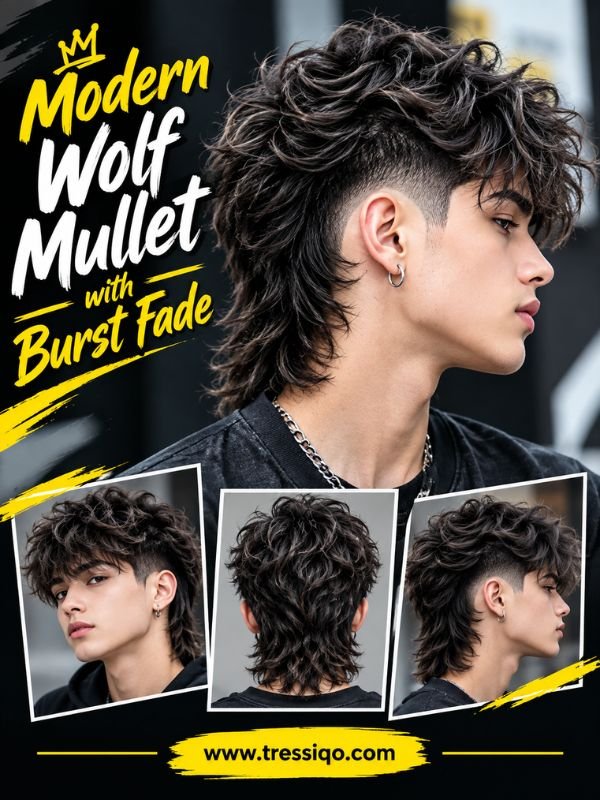
The wolf mullet blends shaggy, heavily layered texture with the traditional mullet silhouette, creating a wilder, more textured overall shape. The burst fade keeps the sides from looking chaotic while the top does its own thing entirely.
This is one of the most requested variations right now, especially among people who want a cut that looks effortless but is actually carefully layered.
Voluminous Modern Mullet with Burst Fade
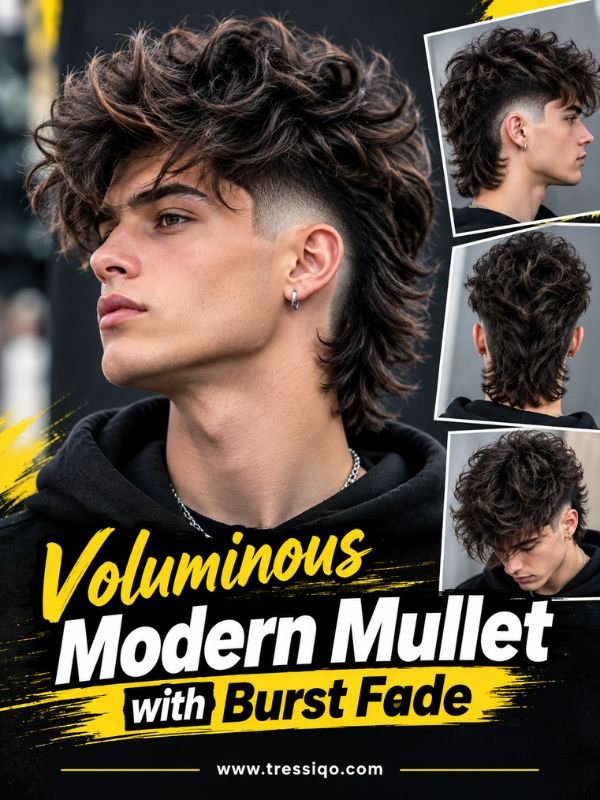
This version is all about height and fullness on top. Heavy layering, strategic blow-drying, and volumizing products combine to create serious lift, while the burst fade keeps the sides proportionate.
If your hair tends to fall flat naturally, this styling approach paired with the right cut can genuinely transform how much volume you get day to day.
Slicked-Back Burst Fade Mullet
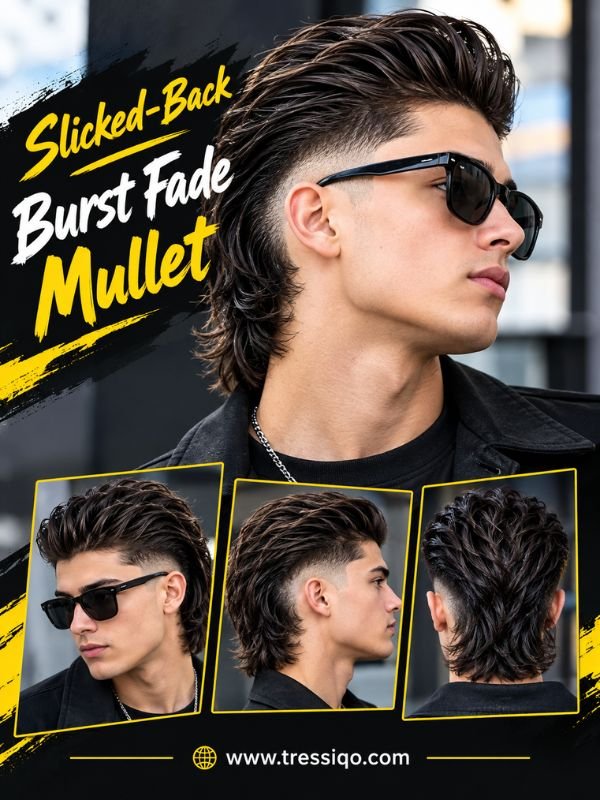
Here, the top gets combed straight back with a strong-hold pomade for a sleek, polished finish. It’s a sharper contrast to the shaggier variations on this list and leans more formal.
This version works particularly well for dressier occasions where you still want the mullet shape but need something a bit more refined.
Middle Part Burst Fade Mullet
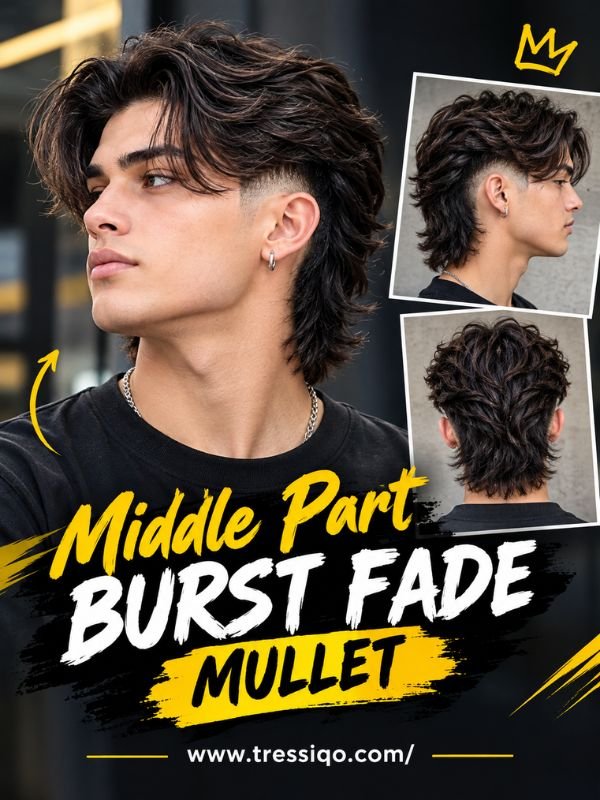
A center part changes the whole framing of the top section, splitting the length evenly on either side of your face. It’s a distinctly different vibe from a side part or slicked-back style, and it’s had a real resurgence recently.
This works best with medium to long top length, since a middle part needs enough hair on each side to actually fall into place.
Burst Fade Mullet with Curtain Bangs
Curtain bangs part in the middle and frame both sides of the face, softening the overall look. Paired with a burst fade mullet, they add a distinctly current, slightly androgynous edge that’s popular with both men and women right now.
This combination works especially well for people who want the mullet’s rebellious energy balanced out with something a little softer up front.
Disconnected Burst Fade Mullet
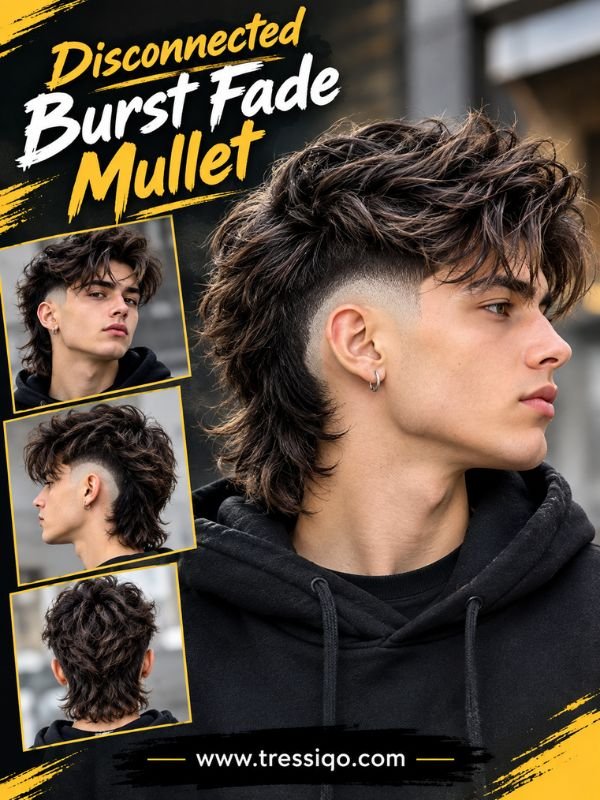
Instead of a smooth gradient, a disconnected fade creates a visible, deliberate gap between the long top and the short sides. It’s a bolder statement than a standard blended fade and gives the whole cut a more graphic, editorial feel.
This one needs regular upkeep to keep the disconnection looking crisp rather than just grown out and messy.
Best Modern Mullet with Burst Fade by Hair Type
Not every version of this cut works equally well for every hair texture. Here’s how to adjust based on what you’re working with.
Burst Fade Mullet for Fine Hair
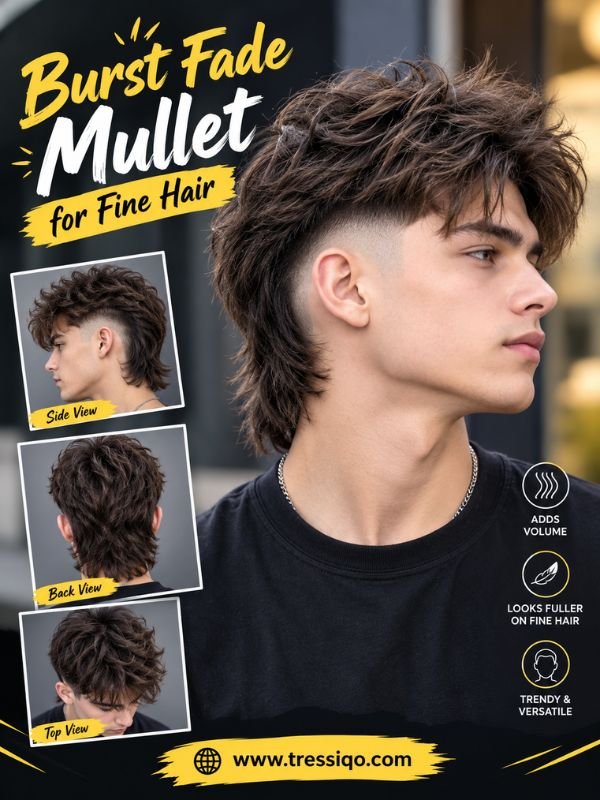
Go for shorter to medium length with light layering rather than heavy texturizing, which can make fine hair look thin. Volumizing mousse and root-lifting blow-dry techniques matter more here than they do for any other hair type.
Burst Fade Mullet for Thick Hair
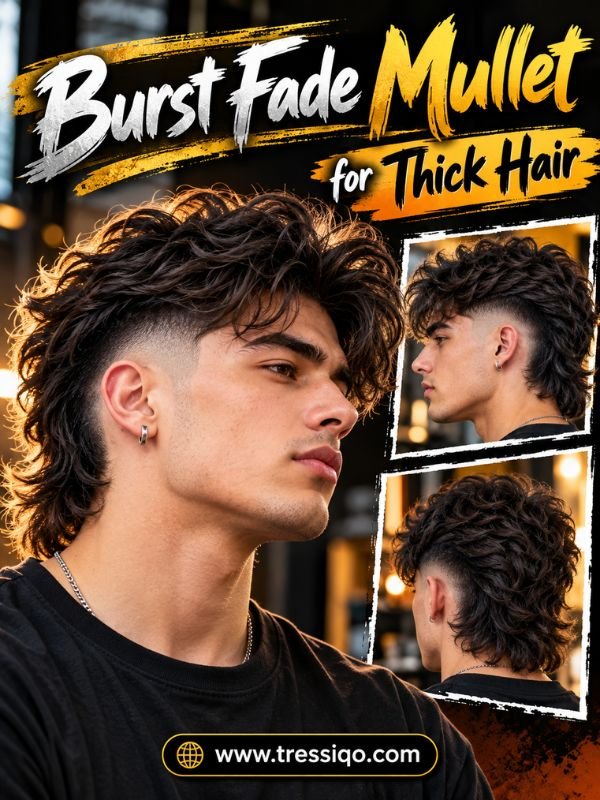
Thinning shears are your friend. Ask your barber to remove bulk from the top and back so the style doesn’t feel heavy, while the burst fade handles bulk reduction on the sides naturally.
Burst Fade Mullet for Curly Hair
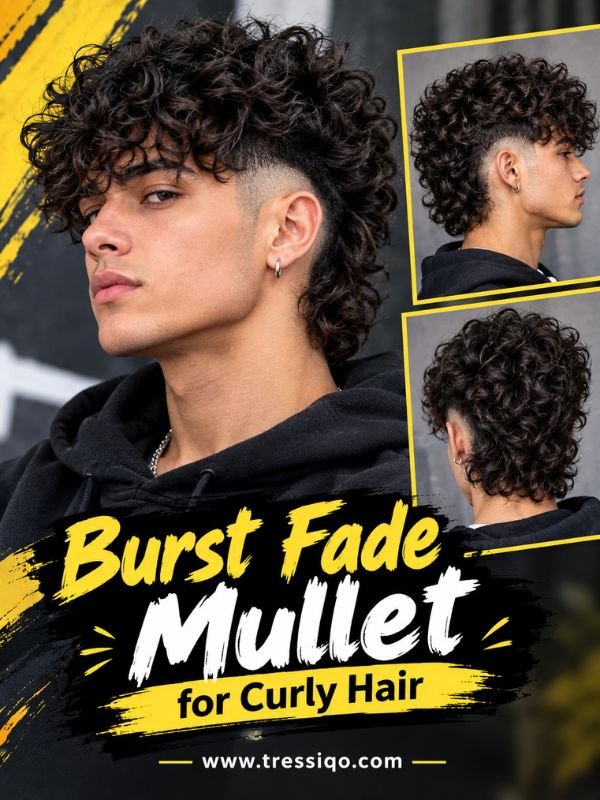
Let the curls stay long enough to show their natural pattern, and avoid cutting too much layering, which can cause curls to spring up shorter than expected. A curl-specific barber or stylist makes a real difference here.
Burst Fade Mullet for Wavy Hair
Wavy hair handles texture and shag-style layering beautifully. Lean into shaggy or tousled variations, since the natural wave pattern does a lot of the styling work for you already.
Best Modern Mullet with Burst Fade by Face Shape
Face shape affects how a mullet’s length and volume read visually. Here’s a quick guide.
Burst Fade Mullet for Round Faces
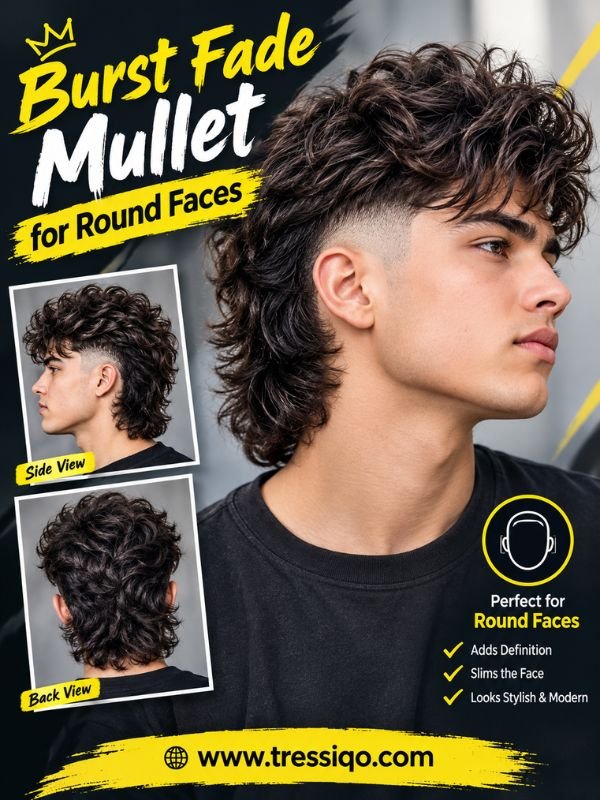
Add height on top and keep the sides tighter to create the illusion of length. A high burst fade paired with a voluminous top elongates a round face nicely.
Burst Fade Mullet for Oval Faces
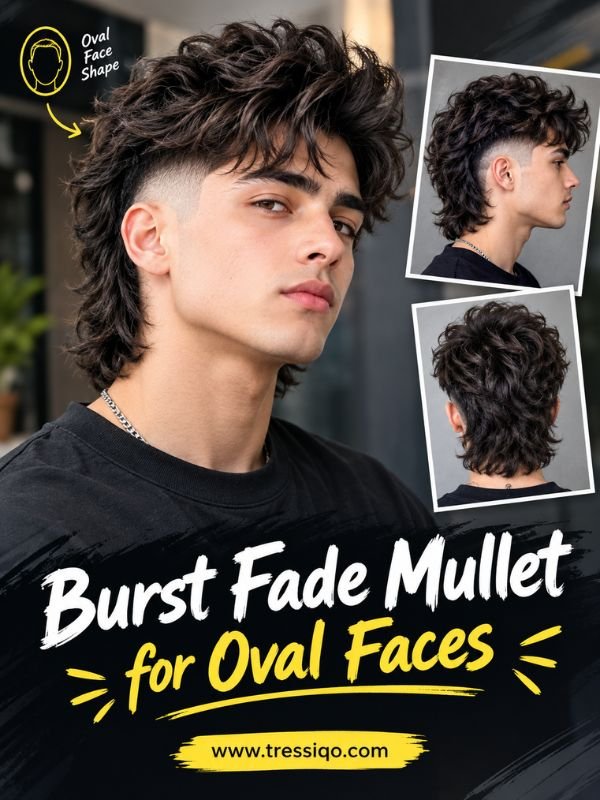
Oval face shapes can wear almost any variation on this list without issue. Consider yourself lucky and pick based on style preference rather than face-shape strategy.
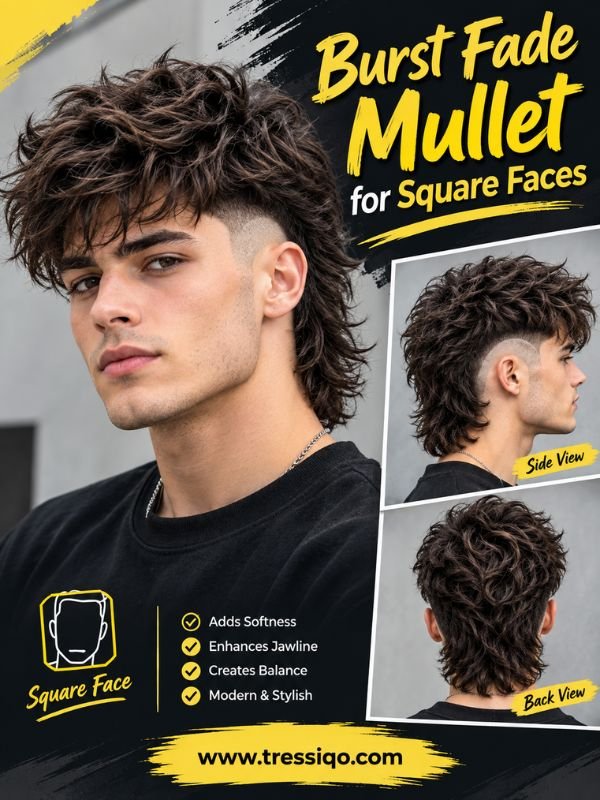
Burst Fade Mullet for Square Faces
Softer layering and a fringe or curtain bangs help balance out strong jaw and forehead lines. Avoid overly sharp, high-contrast fades, which can emphasize angularity you might not want highlighted.
Burst Fade Mullet for Heart-Shaped Faces
Keep more volume and width through the jaw area rather than piling everything on top. A middle part or side-swept fringe helps balance a narrower chin against a wider forehead.
How to Style a Modern Mullet with Burst Fade
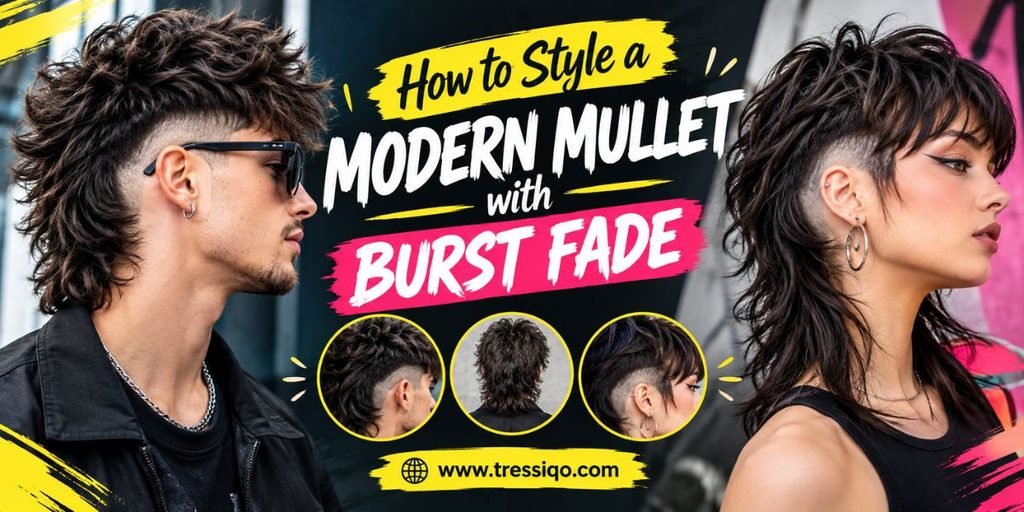
Getting the cut right is only half the job. Here’s how to actually style it once you’re home.
Prep the Hair Before Styling
Start with clean, towel-dried hair, damp but not soaking wet. Product applied to overly wet hair won’t distribute evenly and tends to slide right off once your hair dries.
Define the Fade with a Clean Line
Use a fine-tooth comb to define the edge between the fade and the longer top section. This isn’t strictly necessary daily, but it sharpens the overall look for photos or events.
Add Texture and Volume on Top
Work a small amount of texture spray or sea salt spray through the roots, then blow-dry with your fingers rather than a brush. This builds natural-looking lift without flattening the hair the way brushing often does.
Set the Style with the Right Product
Finish with pomade for shine and hold, or styling cream if you want a more matte, natural finish. Apply to your palms first, rub them together, then work the product through from the ends toward the roots.
Maintenance Tips for a Modern Mullet with Burst Fade
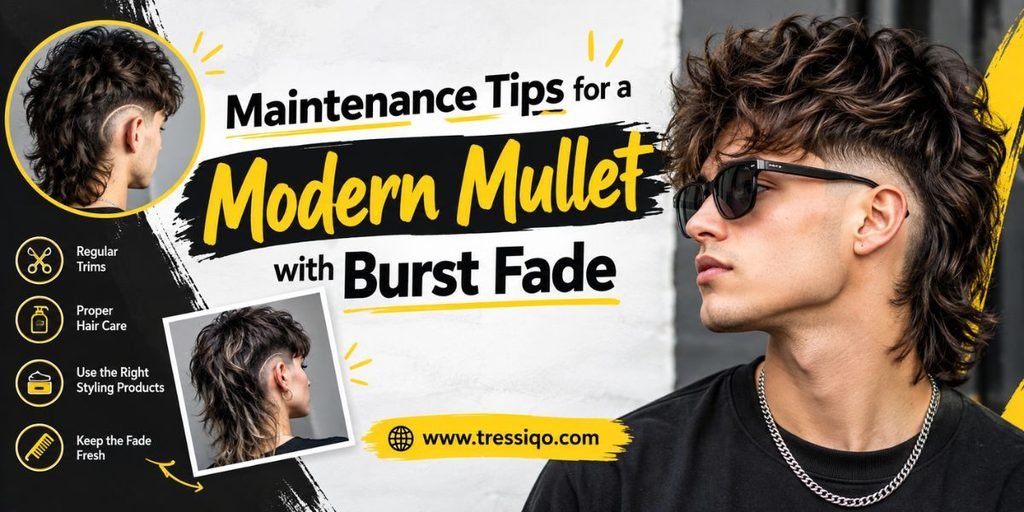
A sharp fade doesn’t stay sharp forever. Here’s how to keep the whole cut looking intentional between visits.
Get the Fade Refreshed Regularly
Book a fade refresh every 2-3 weeks. Fades grow out faster than the rest of the haircut, and a blurry, overgrown fade undercuts the whole point of the style.
Trim the Back to Keep the Shape
The back and top can go longer between full trims since you’re growing that section out anyway. Still, get the ends checked periodically so split ends don’t accumulate and make the length look unhealthy.
Use Lightweight Products Between Cuts
Heavy products build up fast on shorter, faded sides and can make hair look greasy well before it actually needs washing. Stick to lightweight formulas and save the heavier pomades for special occasions.
Modern Mullet with Burst Fade FAQs
How Often Should You Get a Burst Fade Touched Up?
Every 2-3 weeks is the general rule, though high and skin fades tend to need touch-ups closer to the two-week mark since regrowth shows faster near the skin. Low and mid fades can usually stretch a bit longer between visits.
Does a Burst Fade Mullet Work on Curly Hair?
Yes, and curly hair actually adds a lot of natural character to this cut. Ask your barber for a curl-specific cutting technique, and use curl-defining products to keep the shape looking intentional rather than frizzy.
Is a Burst Fade Mullet Low Maintenance?
It depends entirely on the variation you choose. A short, low-fade version is genuinely easy to maintain, while high-contrast, long, or color-treated versions need more frequent barbershop visits and daily styling effort
Final Thoughts
Fifty variations is a lot to take in, but the core idea stays simple: keep length up top and in back, let the burst fade handle the sides, and adjust everything else to fit your hair type, face shape, and how much upkeep you’re actually willing to do. That’s really the whole formula.
Don’t feel like you need to pick the boldest version just because it’s trending. A low fade with a soft, textured top is just as legitimate a choice as a skin fade with a razor design, and it’ll probably suit your lifestyle better if you’re not into frequent barbershop visits.
The best move is honestly simple. Save two or three photos from this list, bring them to your appointment, and talk through fade height, length, and maintenance with your barber before they pick up the clippers. That conversation is what separates a haircut you love from one you’re growing out by next month.

Ethan Vale is a hair care and hairstyle writer with 5 years of experience researching hair trends, styling techniques, and practical hair care tips. He enjoys creating simple, useful guides that help readers discover new hairstyles and maintain healthier-looking hair. His content focuses on clear advice, modern trends, and everyday styling inspiration.