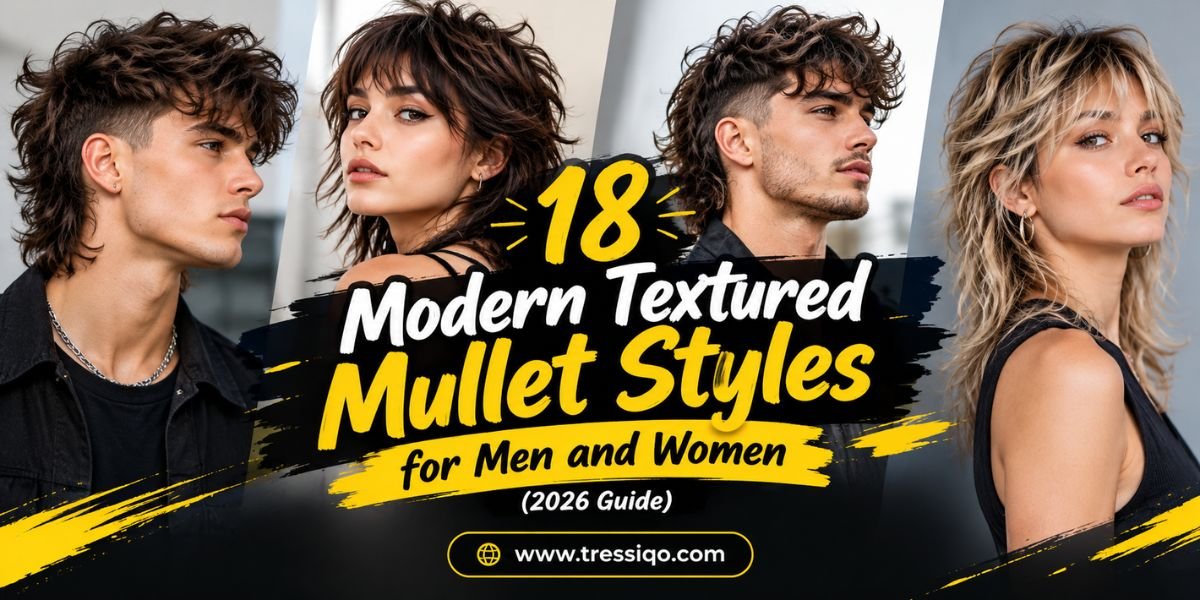
18 Modern Textured Mullet Styles for Men and Women (2026 Guide)
A modern textured mullet is a haircut with short, faded sides and a longer back. Choppy layers on top give it movement. Unlike the old-school version, it blends instead of clashing.
This textured mullet haircut has taken over feeds, and the men’s mullet 2026 wave isn’t slowing down. It isn’t only a guy thing, either. Women wear it with softer layers and a longer fringe.
Below you’ll find 18 styles, face shape picks, a five-minute styling routine, and a trim schedule. Pick a favorite, screenshot it, and show your barber.
Key Features of a Modern Textured Mullet
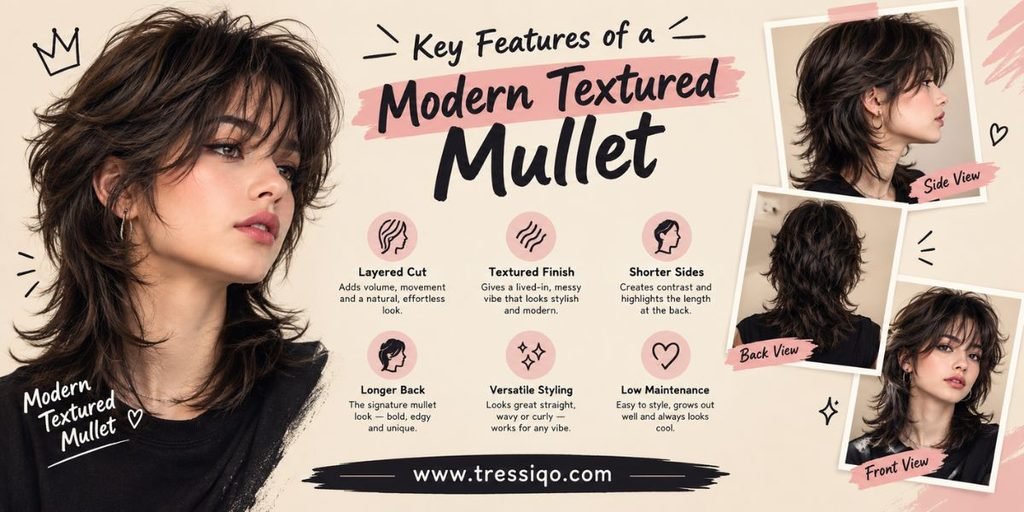
Five features define the cut: natural movement, layers, fades, flexible length, and quick styling. Each one changes how the haircut looks and how much work it takes.
Here’s what each feature does for you.
Natural Texture
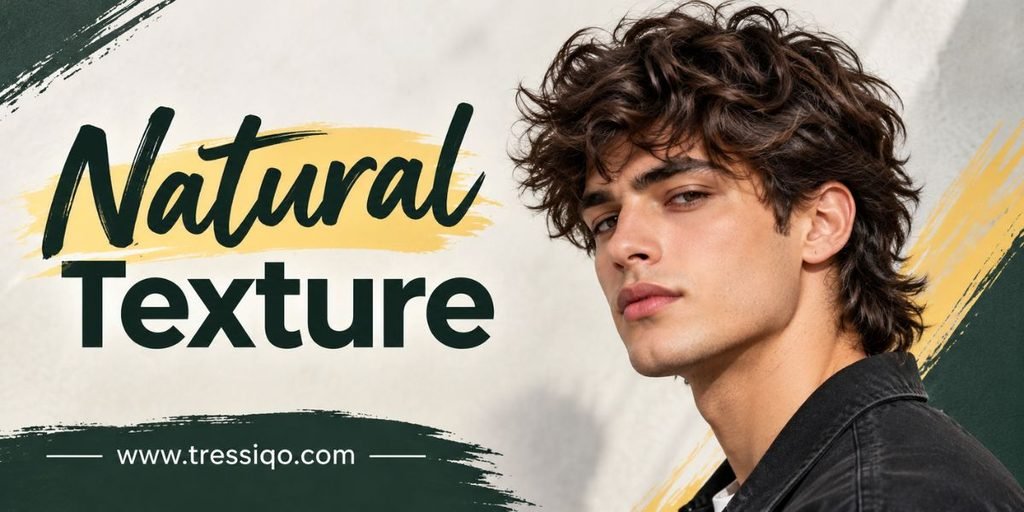
Natural texture hair is the starting point. The cut works with your waves, bends, or kinks instead of fighting them.
That’s why it looks relaxed and dries fast. You’ll spend less time with a brush and more time out the door.
Layered Volume
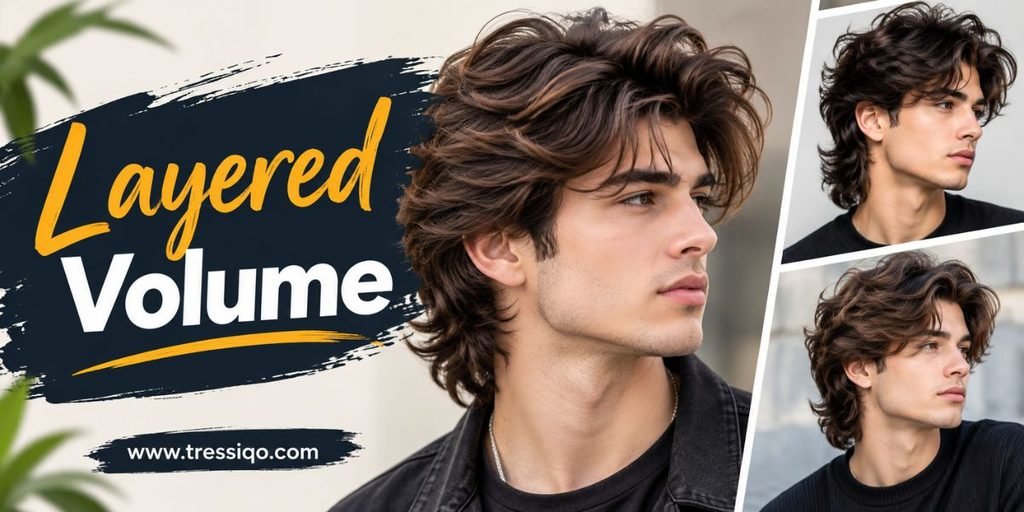
Layers create layered volume by removing weight in the right spots. Without them, a mullet hangs flat like a curtain.
With them, the top lifts and the back feathers out. The shape looks full without looking bulky.
Clean Fades
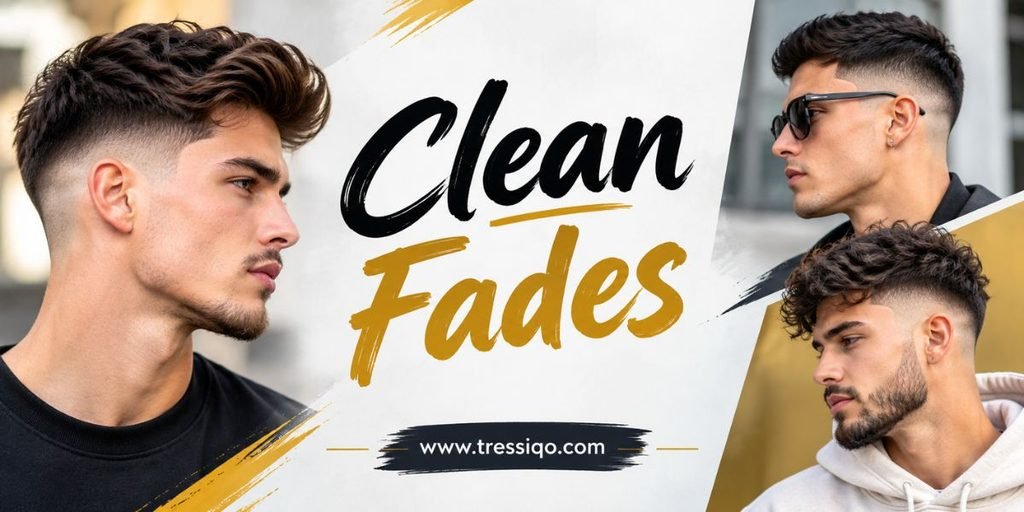
Clean fades shorten the sides gradually, from skin or stubble up to the longer top. They give the cut a crisp outline.
Skip the fade, and the shape looks scruffy fast.
Versatile Length

A versatile length mullet can sit at your collar or hit your shoulders. You decide how bold to go.
A short back reads office-friendly. A long one reads festival-ready.
Easy Styling
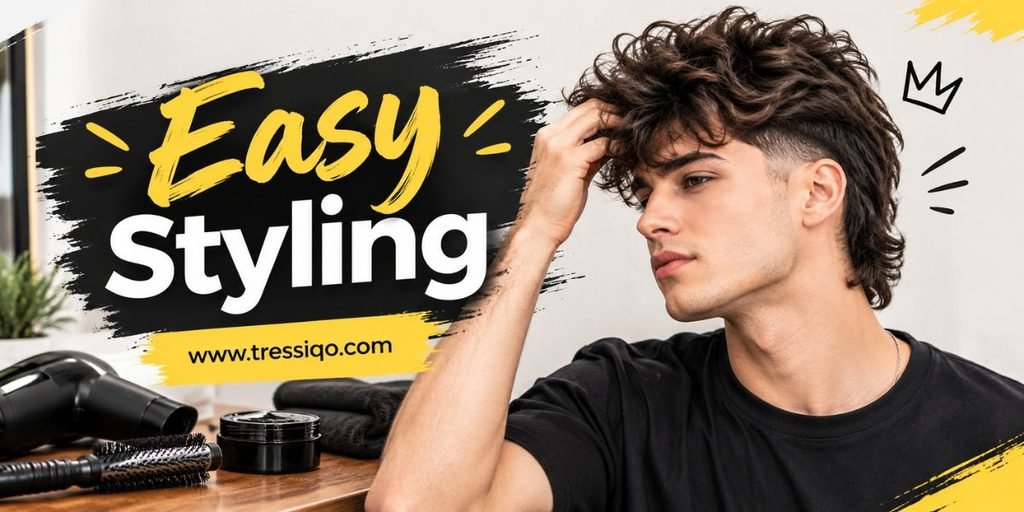
It’s an easy styling haircut. Most mornings take five minutes and one or two products.
You don’t need a blow-dry station or a shelf of gels. A little spray and clay usually does it.
How to Choose the Right Textured Mullet
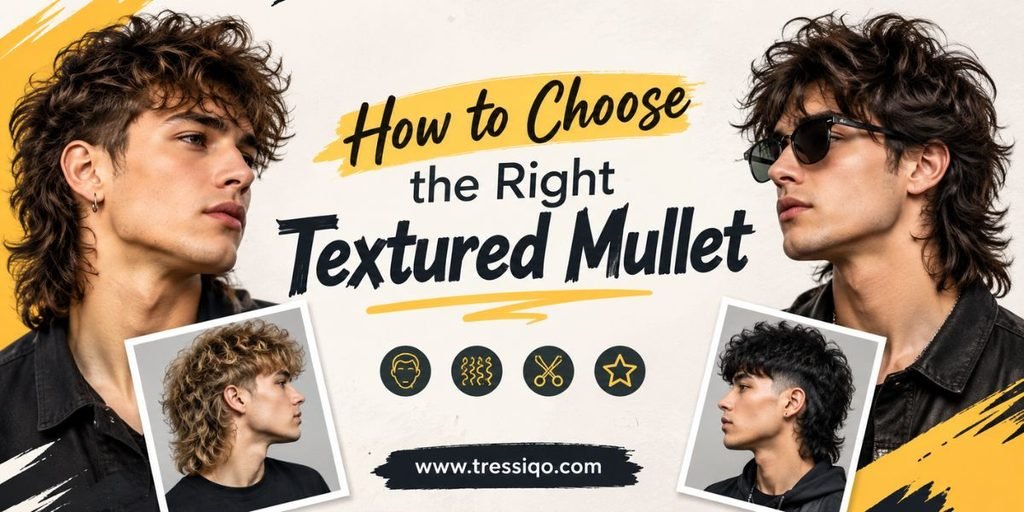
Choose by matching three things: your hair type, your face shape, and your daily routine. Start with the hair, because a hair type haircut only works when the cut respects your natural pattern.
Here’s how that breaks down:
- Textured mullet for straight hair: add layers and lift, since straight strands fall flat easily.
- Textured mullet for curly or wavy hair: keep more length, because curls shrink as they dry.
- Fine hair: go shorter in the back and use fewer layers.
- Thick hair: ask for weight removal so the back doesn’t flare.
Next, think about your day. The best fade for a textured mullet depends on where you spend it. A low fade fits an office. A burst fade fits a night out. A face shape haircut comes later in this guide, so you can fine-tune from there.
18 Modern Textured Mullet Styles
These 18 styles cover most hair types, budgets, and dress codes. Read through them and note two or three that fit your hair.
Classic Textured Mullet
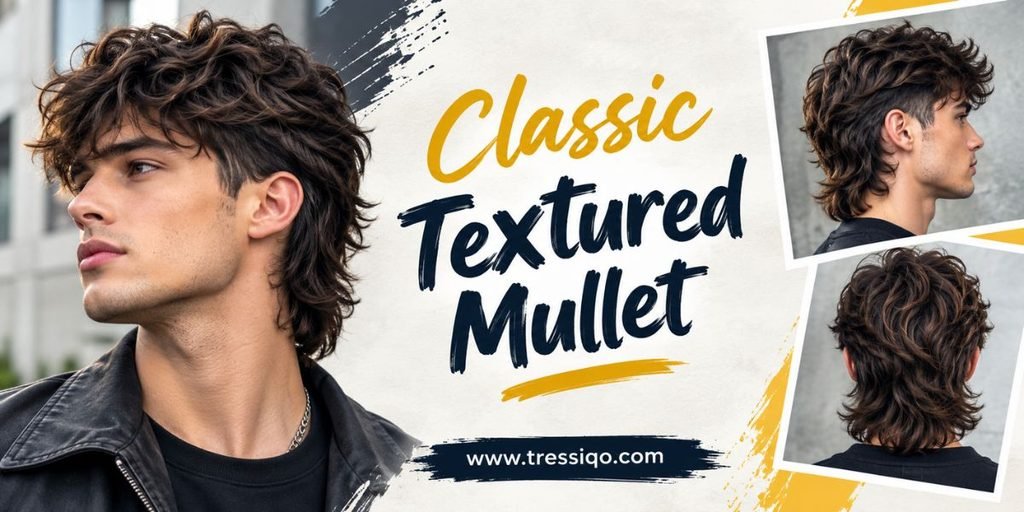
The classic textured mullet is the best place to start. It has a slightly longer back, soft layers on top, and a mild taper at the sides.
It works for most hair types, and it’s a beginner-friendly mullet. In the textured mullet vs classic mullet debate, the textured one wins on wearability. It nods to the retro mullet without the costume.
Taper Fade Textured Mullet
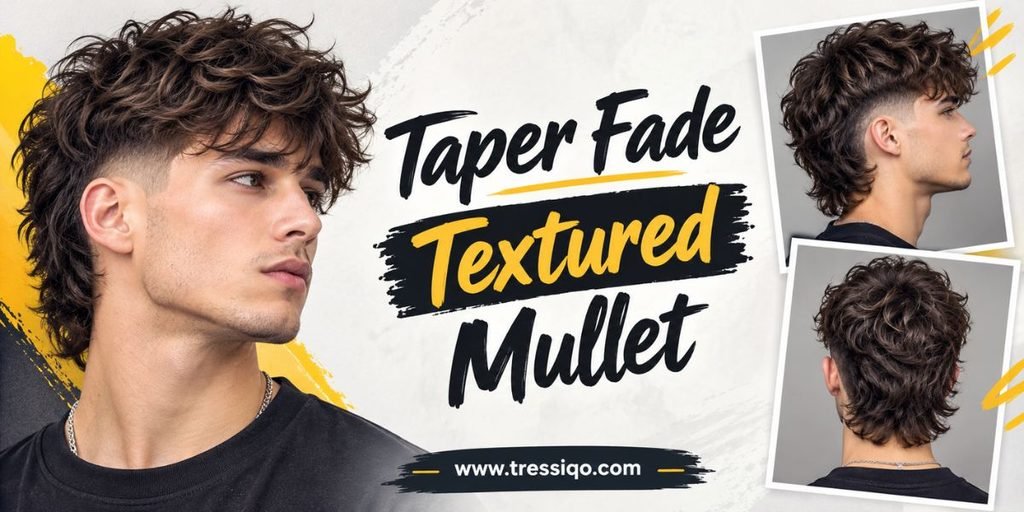
The taper fade textured mullet keeps the sides neat and the top lively. The hair shortens gradually toward the ears and neckline.
It looks polished even with a messy top. Choose it if you want a professional men’s haircut with some personality.
Burst Fade Textured Mullet
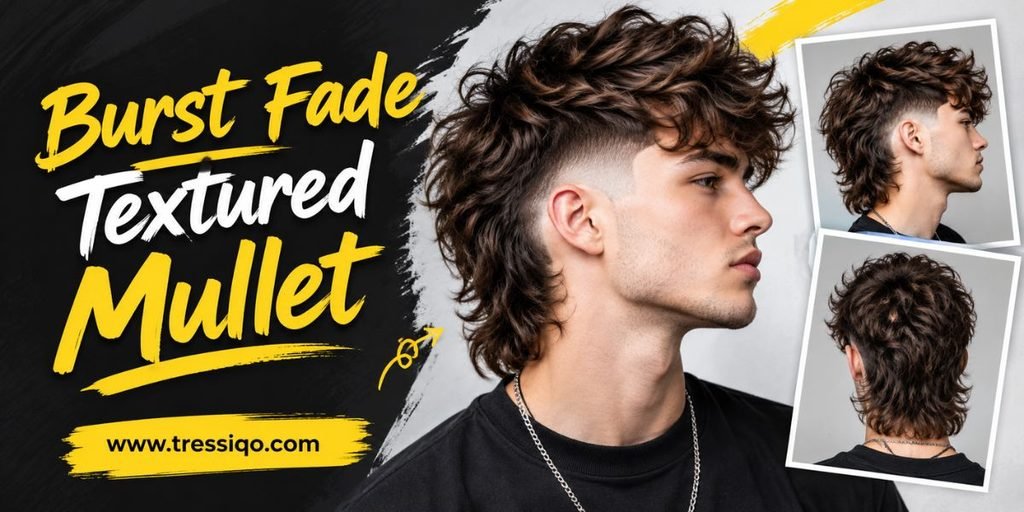
The burst fade textured mullet curves around the ear in a half circle. The fade sweeps up and back, leaving length behind.
That creates strong contrast. Ask for the curve to blend into a long, choppy back. It works best on medium to thick hair.
Low Fade Textured Mullet
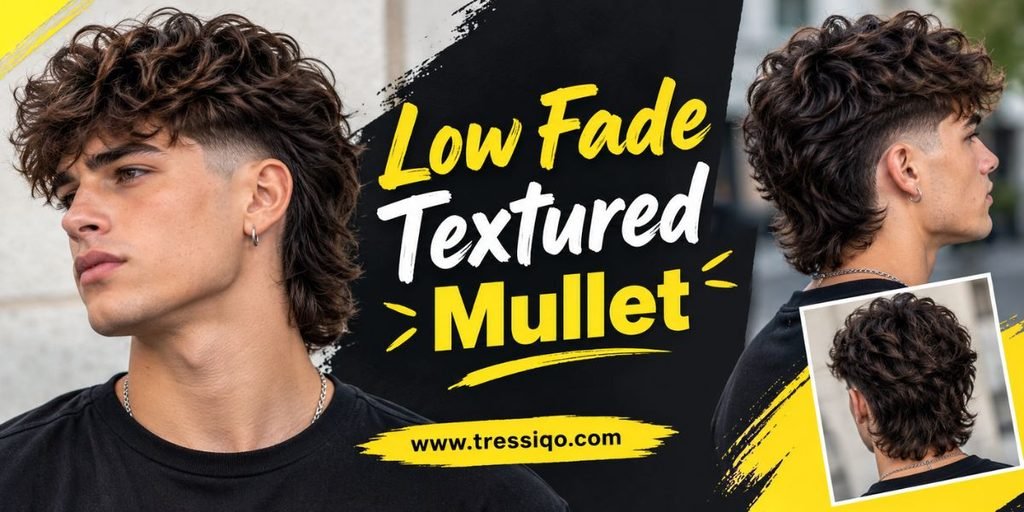
The low fade textured mullet is the subtle option. The fade starts just above the ears and neckline, so contrast stays soft.
It suits a conservative workplace hairstyle. It also grows out gracefully, which helps if you hate monthly trims.
High Fade Textured Mullet
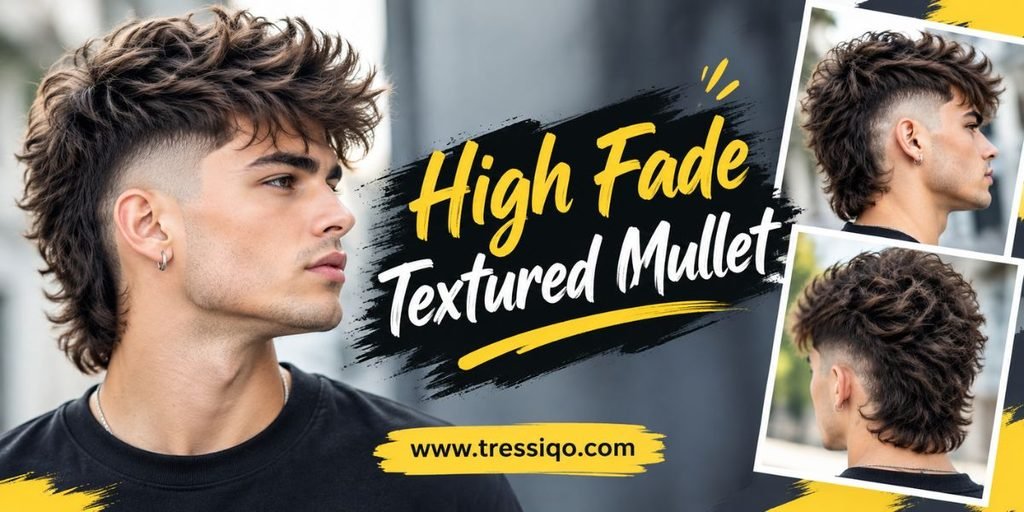
The high fade textured mullet shows the most skin. The fade climbs toward the temples and makes the top and back stand out.
It’s a sharp, fashion-forward hairstyle. Keep the top textured so it doesn’t look stiff, and expect more frequent trims.
Messy Textured Mullet
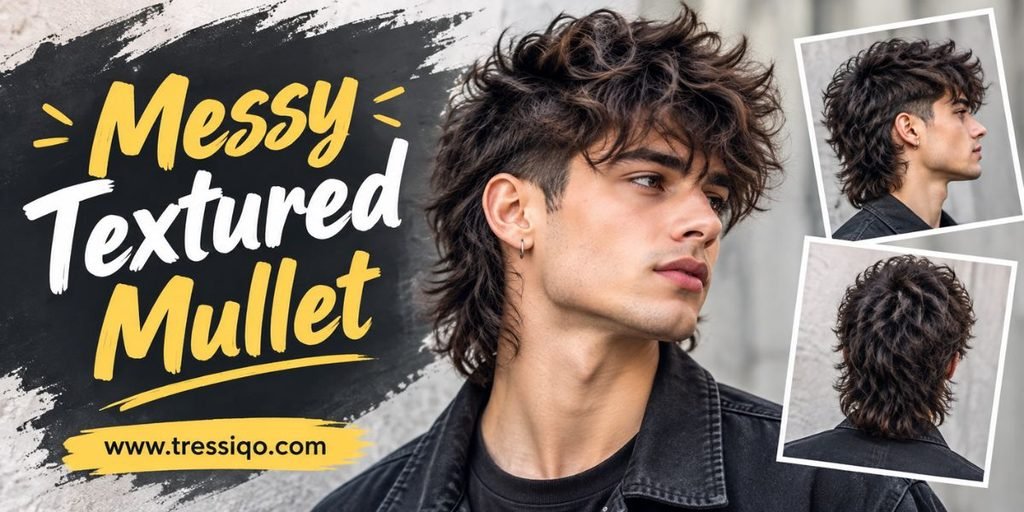
The messy textured mullet looks like you rolled out of bed and still won. Short choppy layers and tousled hair create the effect on purpose.
Use salt spray and skip the comb. Medium and thick hair holds the look best.
Curly Textured Mullet
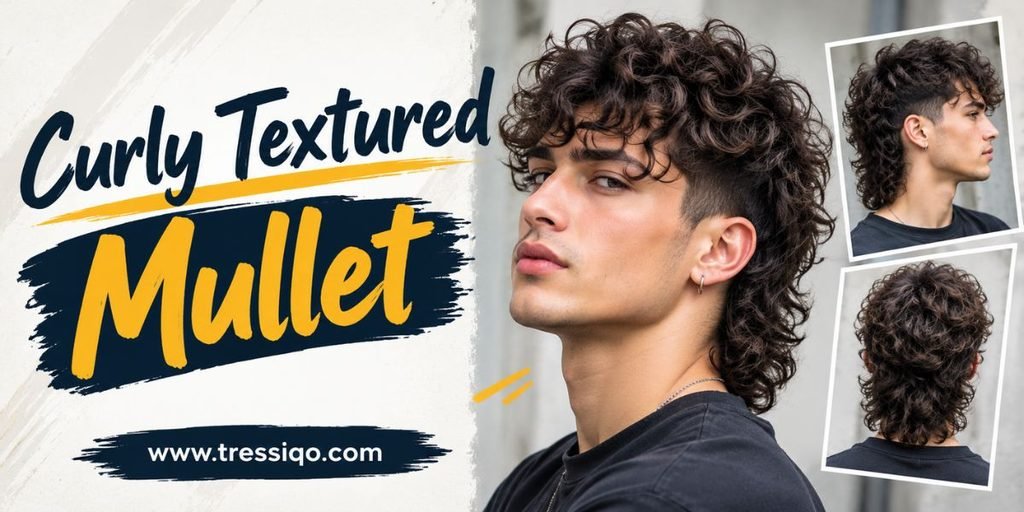
The curly textured mullet lets your curls carry the shape. Layers keep the volume from ballooning into a triangle.
Ask for the cut on dry or semi-dry hair so the barber sees where each curl lands. Skip heavy thinning, because curls need weight to hold their shape.
Wavy Textured Mullet
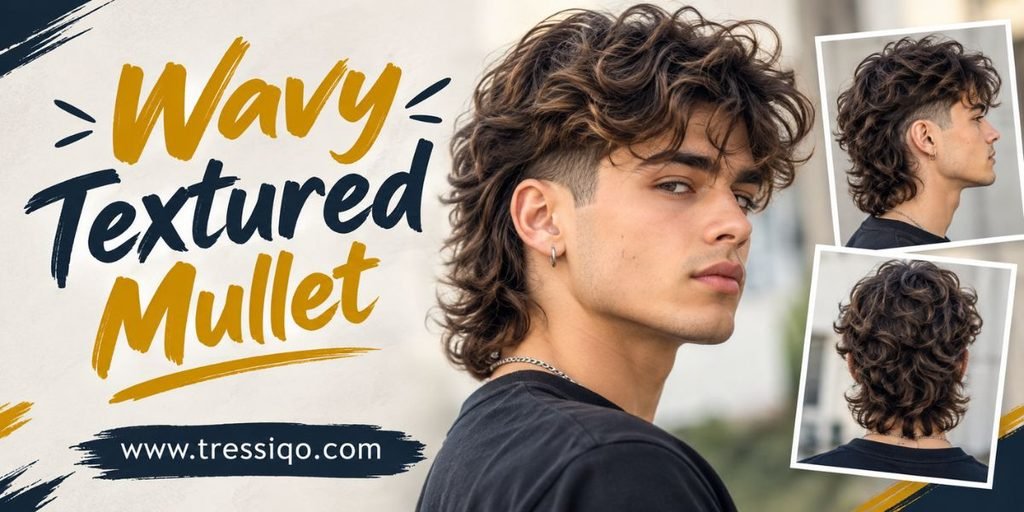
The wavy textured mullet adds flow without much drama. Soft layers follow your natural wave, and the back falls in loose ripples.
It suits medium length and works for casual or semi-formal settings. Keep the layers gentle so waves don’t stack up in odd spots.
Undercut Textured Mullet
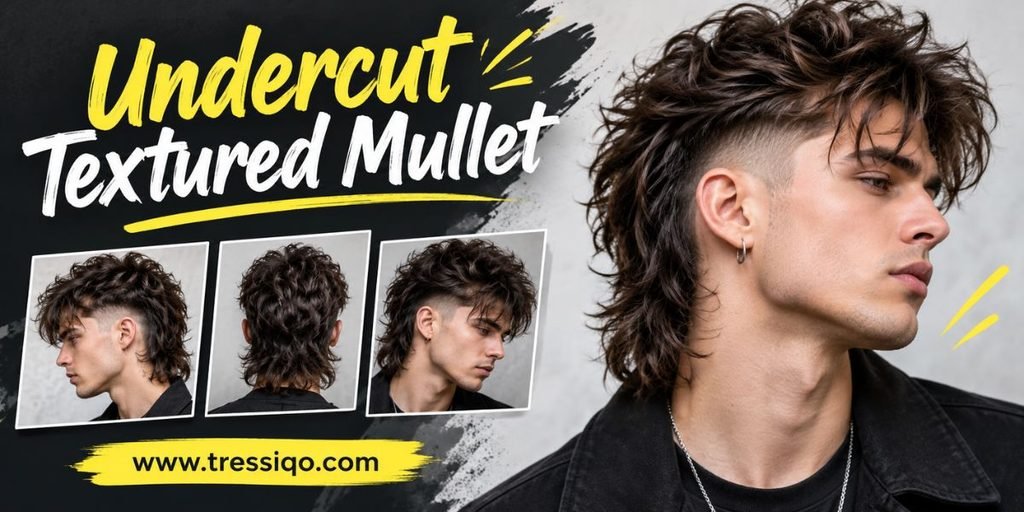
The undercut textured mullet shaves the sides short with no blending. A visible line separates them from the longer top and back.
It’s high contrast and demands regular clipper upkeep. However, the look is hard to miss.
Shaggy Textured Mullet
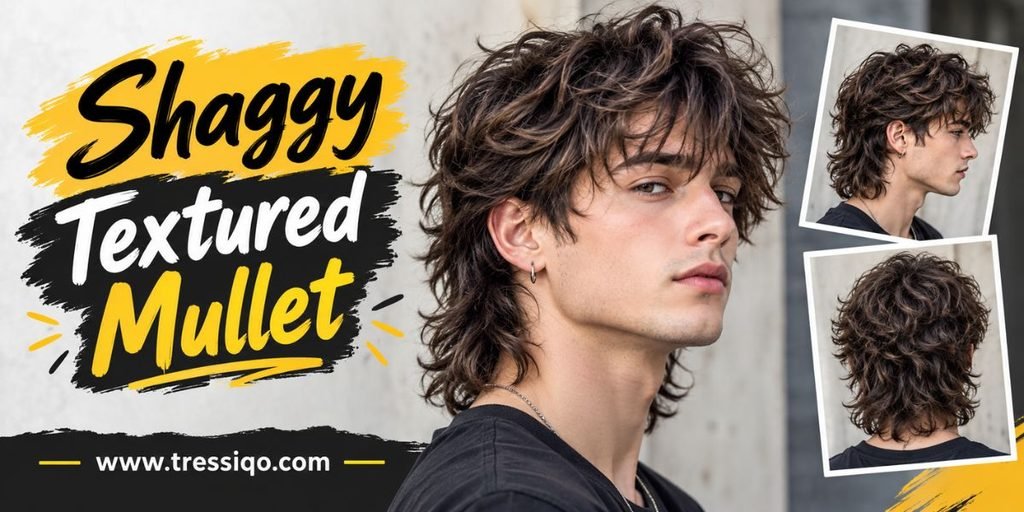
The shaggy textured mullet borrows from 70s rock. Loose, uneven layers fall around the face and over the nape.
It’s volume-heavy and forgiving, because small flaws read as style. Pair it with a minimal fade and a light finishing spray.
Disconnected Textured Mullet
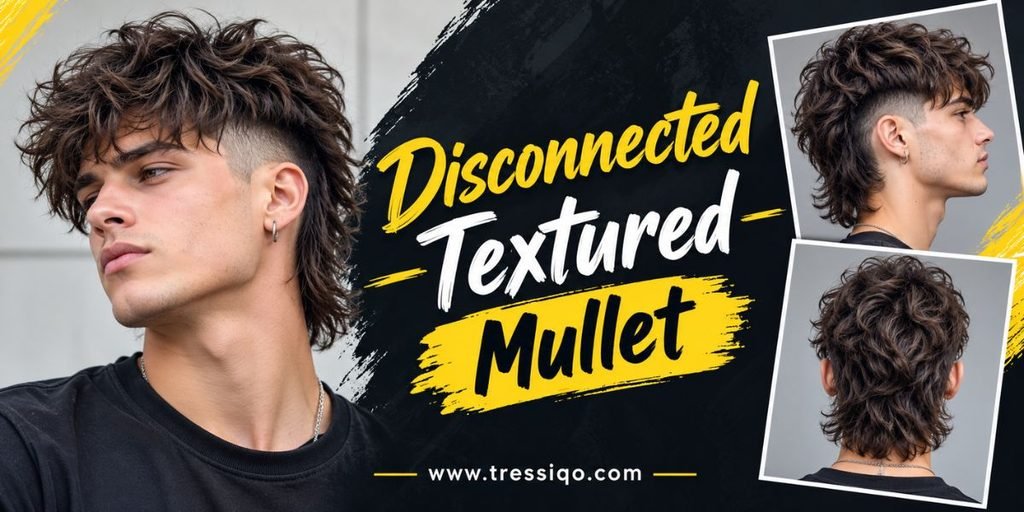
The disconnected textured mullet has a clear break between the top and the sides. There’s no gradual blend, so the top sits like a cap.
It looks dramatic and photographs well. Tell your barber you want the break visible, or they’ll blend it out by habit.
Mini Textured Mullet
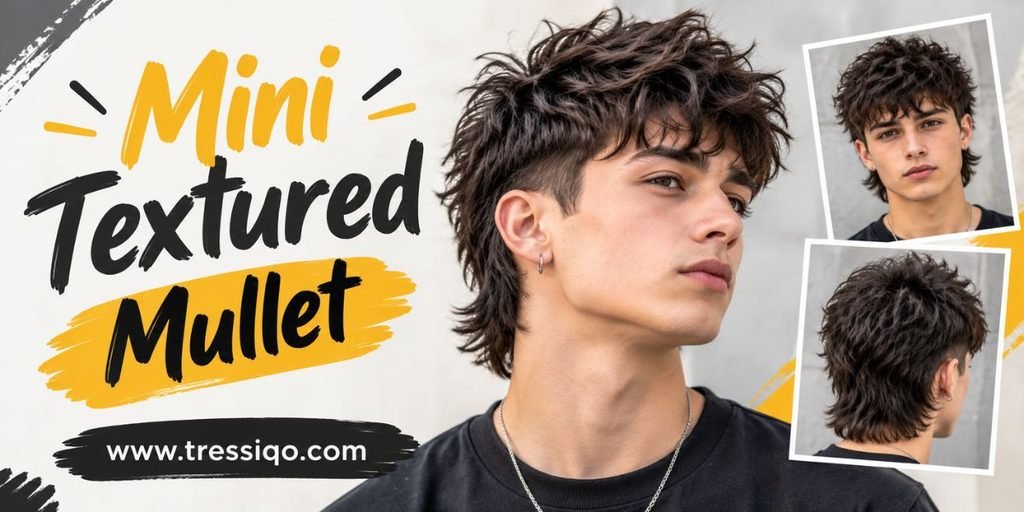
The mini textured mullet keeps the shape and shrinks the length. The back barely touches your collar.
It’s a low-maintenance haircut that fits a desk job. It also makes a smart halfway stage if you’re growing out a full mullet.
Long Textured Mullet
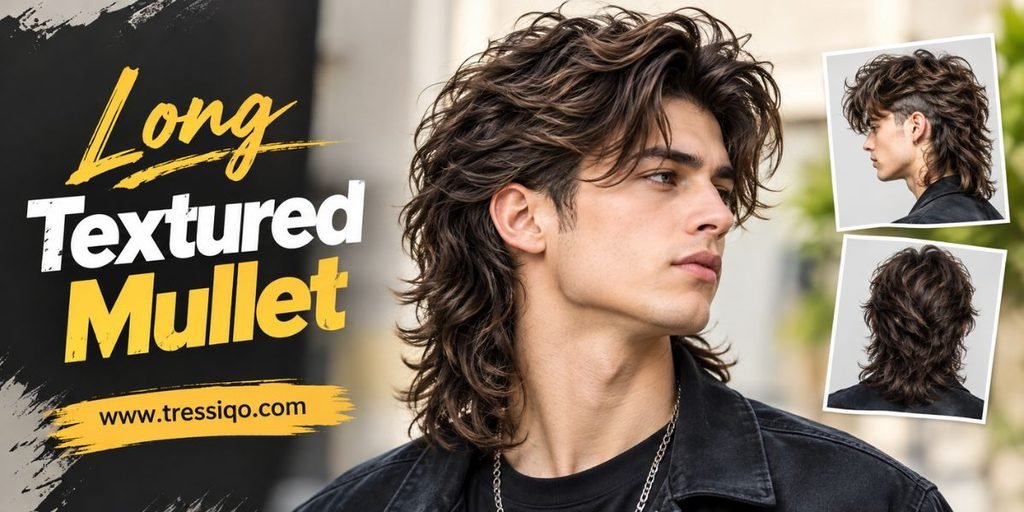
The long textured mullet lets the back reach your shoulders. Heavy layers on top balance the length.
It’s a statement cut that needs patience. Thick hair carries it best, and lightweight products keep the back from clumping.
Skin Fade Textured Mullet
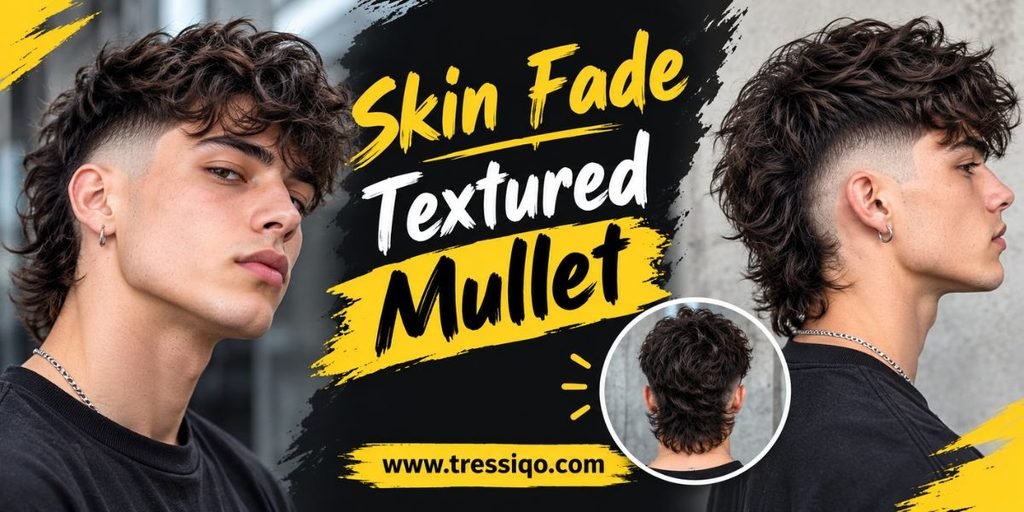
The skin fade version takes the sides down to bare skin. That makes the contrast with the longer top and back much sharper.
It’s a bold, clean look. Expect a trim every three to four weeks, since regrowth shows fast.
Textured Mullet with Fringe
A textured mullet with fringe adds a soft front piece over the forehead. Wispy or side-swept, it frames your face.
Women often pick this version, and plenty of men do too. Keep the fringe lightly layered so it doesn’t weigh down. A shorter fringe helps if your hairline is receding.
Blonde Textured Mullet
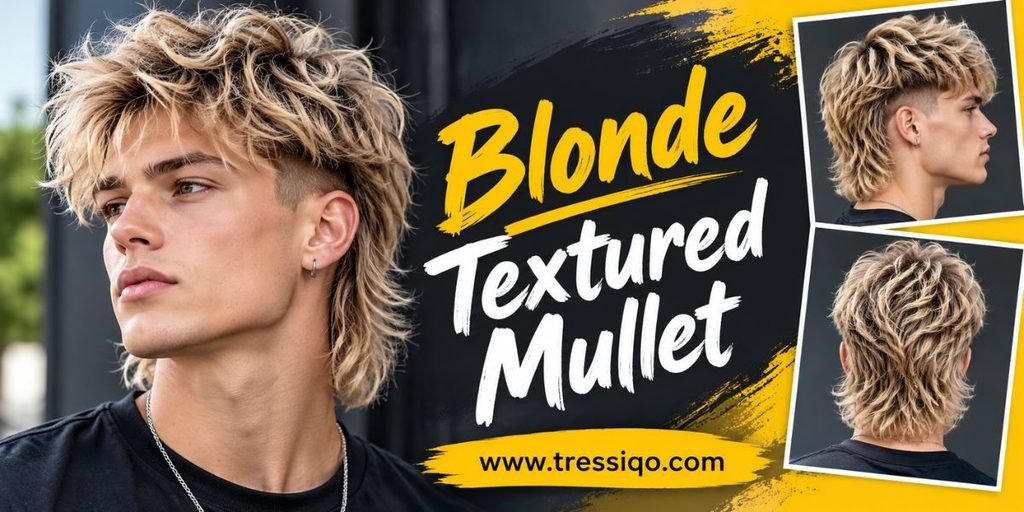
A blonde version pairs the cut with lighter color. Bleach or highlights make the layers pop, so every strand of movement shows.
The tradeoff is dryness. Bleached hair breaks easily, so use a deep conditioner weekly and skip heavy wax.
Textured Mullet for Thick Hair
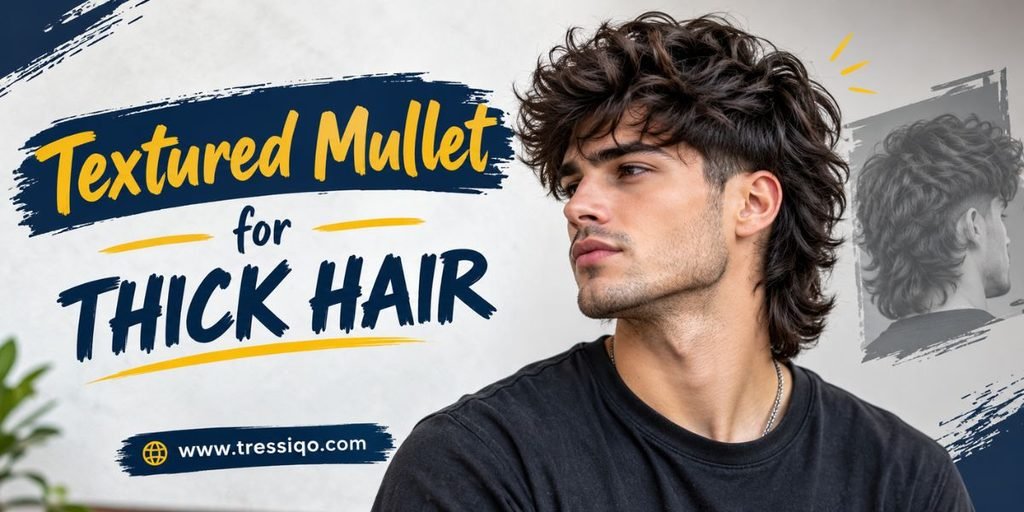
A textured mullet for thick hair needs weight removal. Without it, the back flares out like a triangle.
Ask for internal layering and point cutting at the nape. A small amount of matte clay keeps everything in check.
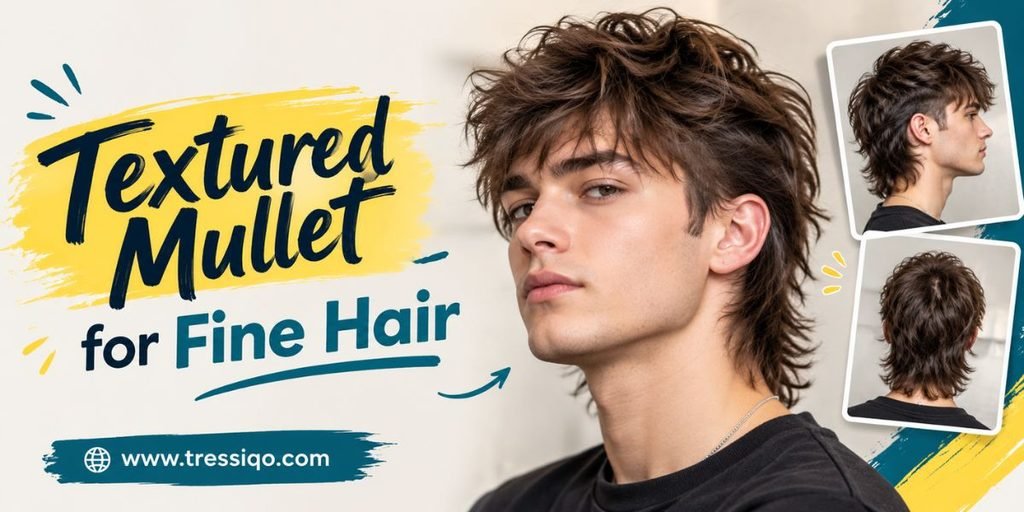
Textured Mullet for Fine Hair
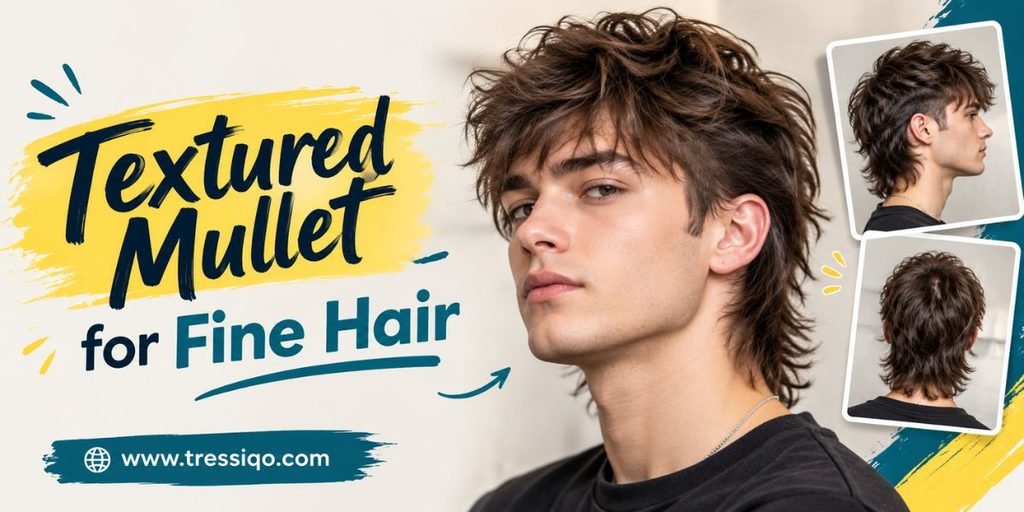
A textured mullet for fine hair works best with a shorter back and light layers. Too many layers make fine strands look thin.
Use texture powder for lift instead of wax. Then blow-dry upward to build volume at the roots.
Best Face Shapes for a Modern Textured Mullet

Your face shape changes which mullet looks best. Match the length and volume to your proportions, and the cut looks balanced.
Here are four common shapes and what suits each.
Oval Face
Oval faces suit nearly every version. The proportions already balance. Try a burst fade or a long back if you want extra edge.
Round Face
Round faces need height and tighter sides. Pick a high or skin fade with volume on top. Avoid wide side volume, since it adds width.
Square Face
Square faces carry texture and length well. Soft layers and a tousled top soften a strong jaw. A shaggy mullet or fringe works nicely.
Heart Face
Heart faces have a wider forehead and a narrower chin. A longer back adds fullness near the jaw. A side-swept fringe softens the forehead.
How to Style a Modern Textured Mullet
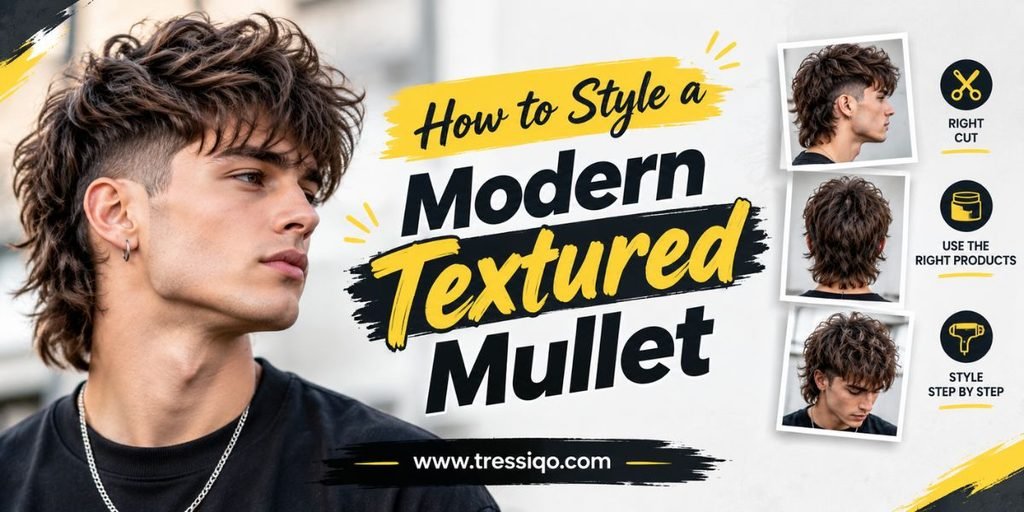
You can style it in five minutes with sea salt spray, a blow-dry for lift, and a little clay or wax. The routine stays the same for most hair types.
Try this order:
- Towel-dry until your hair is damp, not dripping.
- Spray sea salt spray from roots to ends.
- Blow-dry upward and back, lifting the roots with your fingers.
- Warm a pea-sized amount of matte clay between your palms.
- Scrunch it through the top and back. Leave the sides alone.
Finish with a light mist of spray if you need hold. Start with less product than you think. You can always add more, but you can’t un-add it.
Maintenance Tips
Maintenance comes down to regular trims, a tidy neckline, and light products. Back neckline maintenance matters most, because a messy nape ruins an otherwise clean cut.
Here’s the short version:
- Clean up the neckline every two to three weeks.
- Wash with a gentle shampoo, and condition the back.
- Skip heavy gels and waxes that flatten the layers.
Trim Schedule to Keep the Texture Fresh

Book hair trims every four to six weeks to keep the shape sharp. Fades grow out first, and that’s when the cut starts to look tired.
Use this guide:
- Skin and high fades: every three to four weeks.
- Low and taper fades: every four to six weeks.
- The back length: every eight to ten weeks, or when the ends look thin.
Best Products for Lasting Texture

The best products are lightweight styling products that add grip without weight. Heavy formulas flatten layers and leave a greasy finish.
A solid men’s grooming kit looks like this:
- Sea salt spray: adds grit and volume on damp hair.
- Matte clay: gives definition without shine.
- Hair wax: use a tiny amount for shaggy or messy looks.
- Texture powder: lifts fine hair at the roots.
- Light finishing spray: holds the shape without stiffness.
FAQs: Modern Textured Mullet
What is a modern textured mullet?
It’s an updated mullet with short, faded sides, a longer back, and choppy layers on top. The look is softer and easier to wear than the classic version.
Is it suitable for all hair types?
Mostly, yes. Straight, wavy, and curly hair all work with adjustments. Fine hair needs fewer layers, and thick hair needs weight removal. Ask your barber to tailor the cut.
How often should I get a trim?
Book a trim every four to six weeks. High and skin fades need visits every three to four weeks. The back can wait longer if you’re growing it.
Can it be worn professionally?
Yes. A taper fade, low fade, or mini version looks neat at work. Keep the back above your collar and style it with a light product.
What products should I use?
Start with sea salt spray and matte clay. Add texture powder for fine hair or curl cream for curls. Keep everything lightweight.
Conclusion
The best modern textured mullet fits your hair, your face, and your routine. Pick a fade, set your layers, and choose a length you can live with.
Not sure where to begin? Try the classic textured mullet or a mini version. Bring a photo to your barber, ask for the details out loud, and enjoy the cut.

Ethan Vale writes about modern haircuts, trending hairstyles, and practical hair care for Tressiqo. Each guide is built to help you find a cut that suits your hair type and face shape, and to know exactly what to ask your barber for.
One Comment